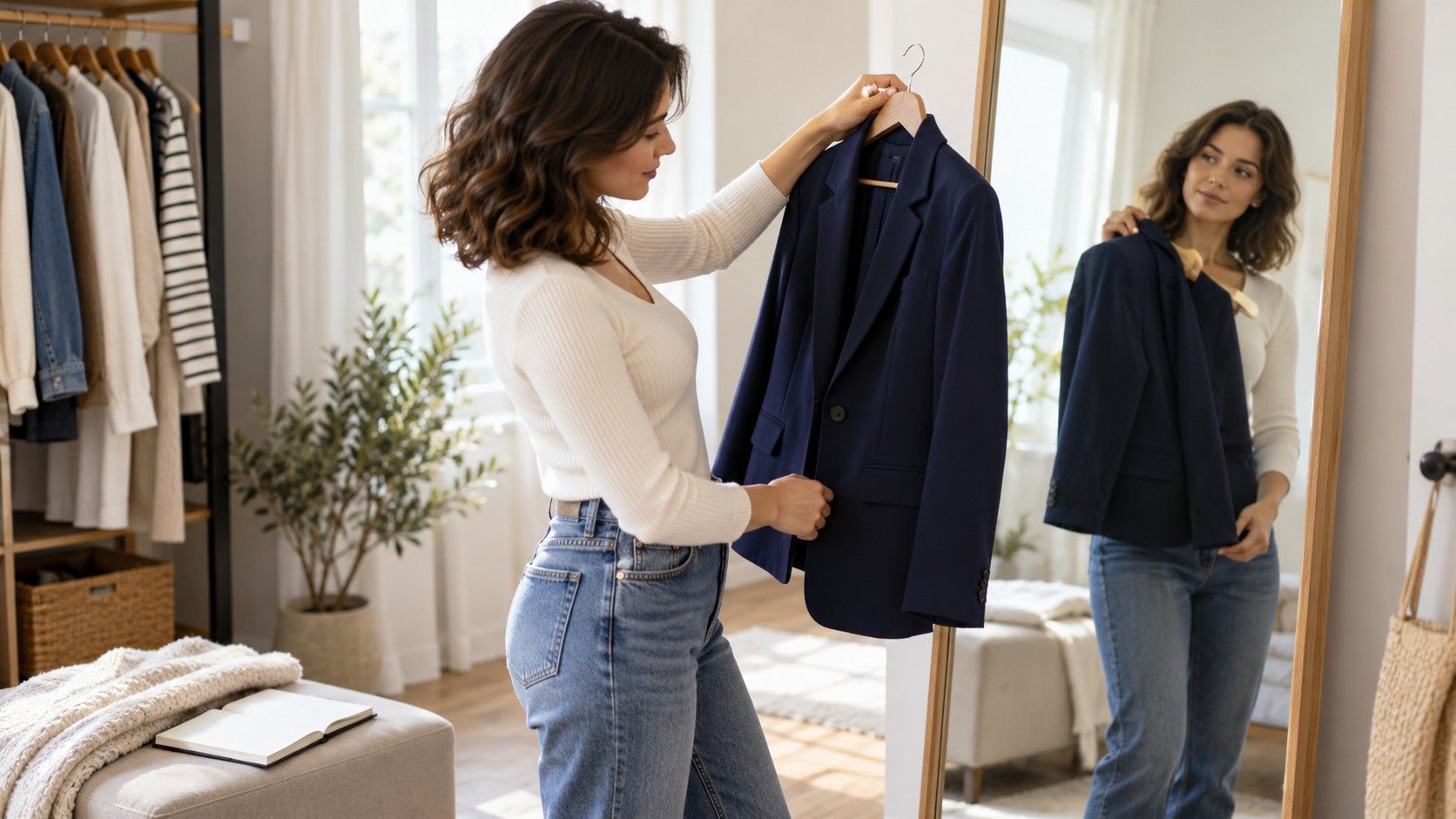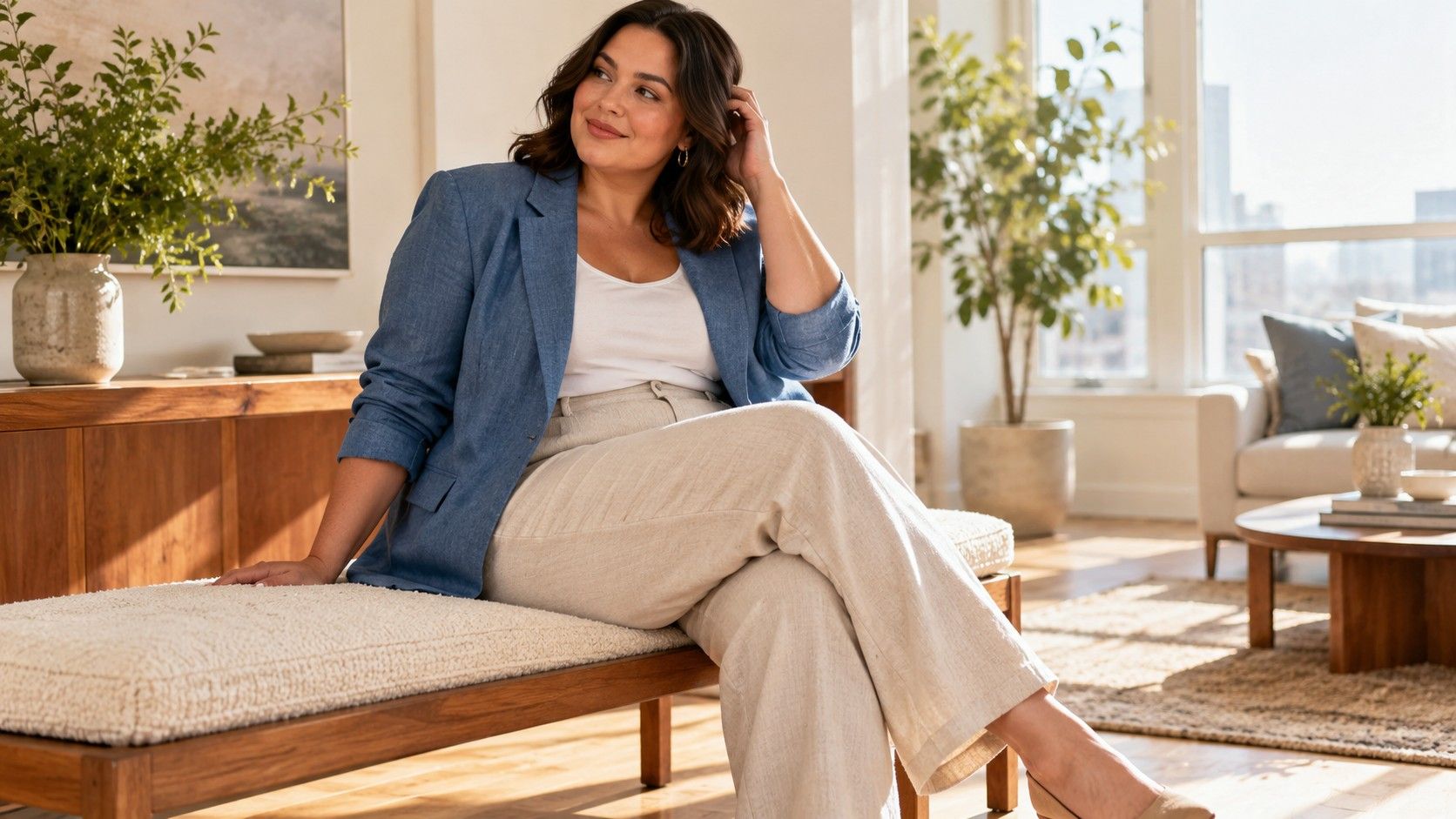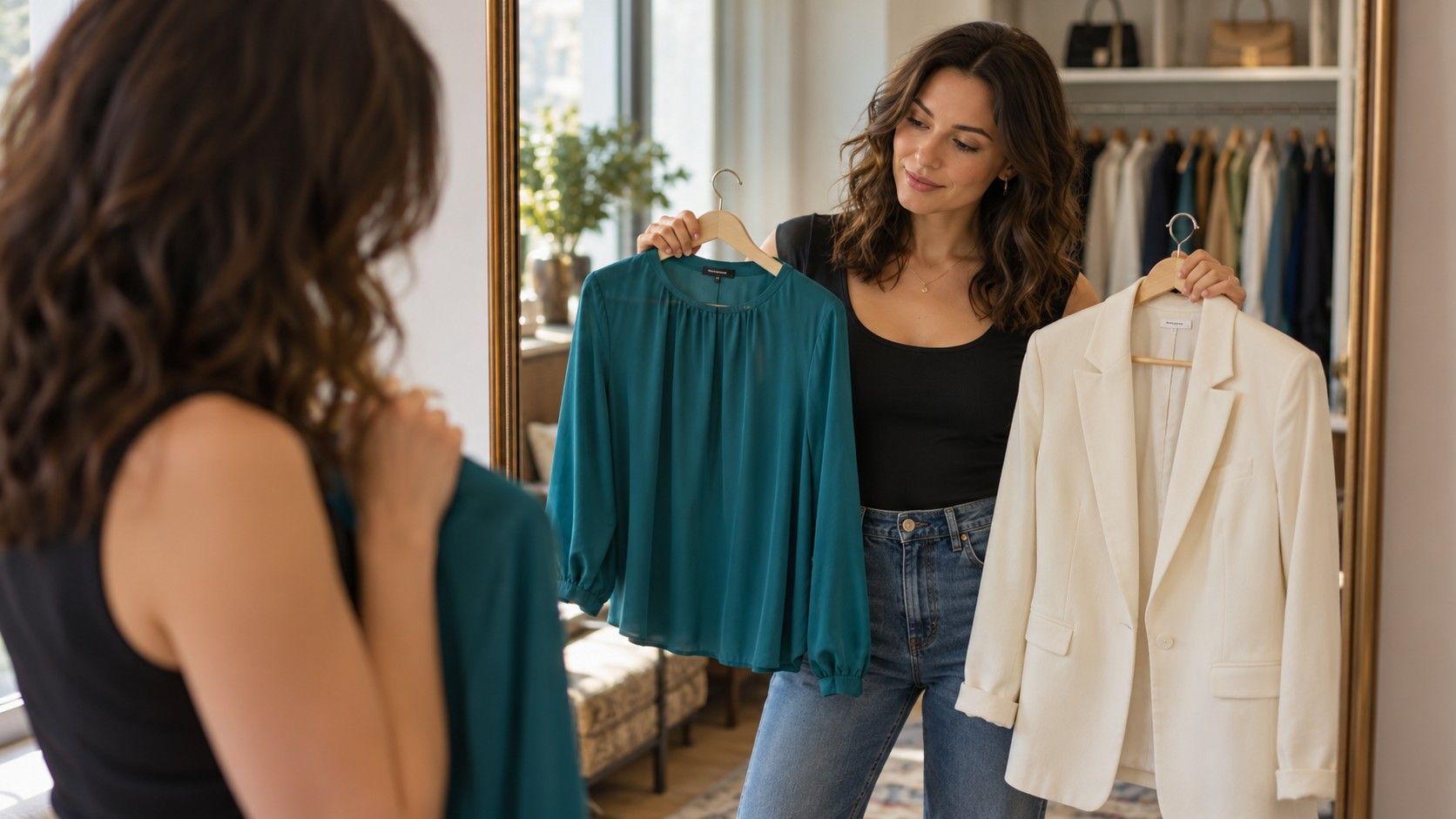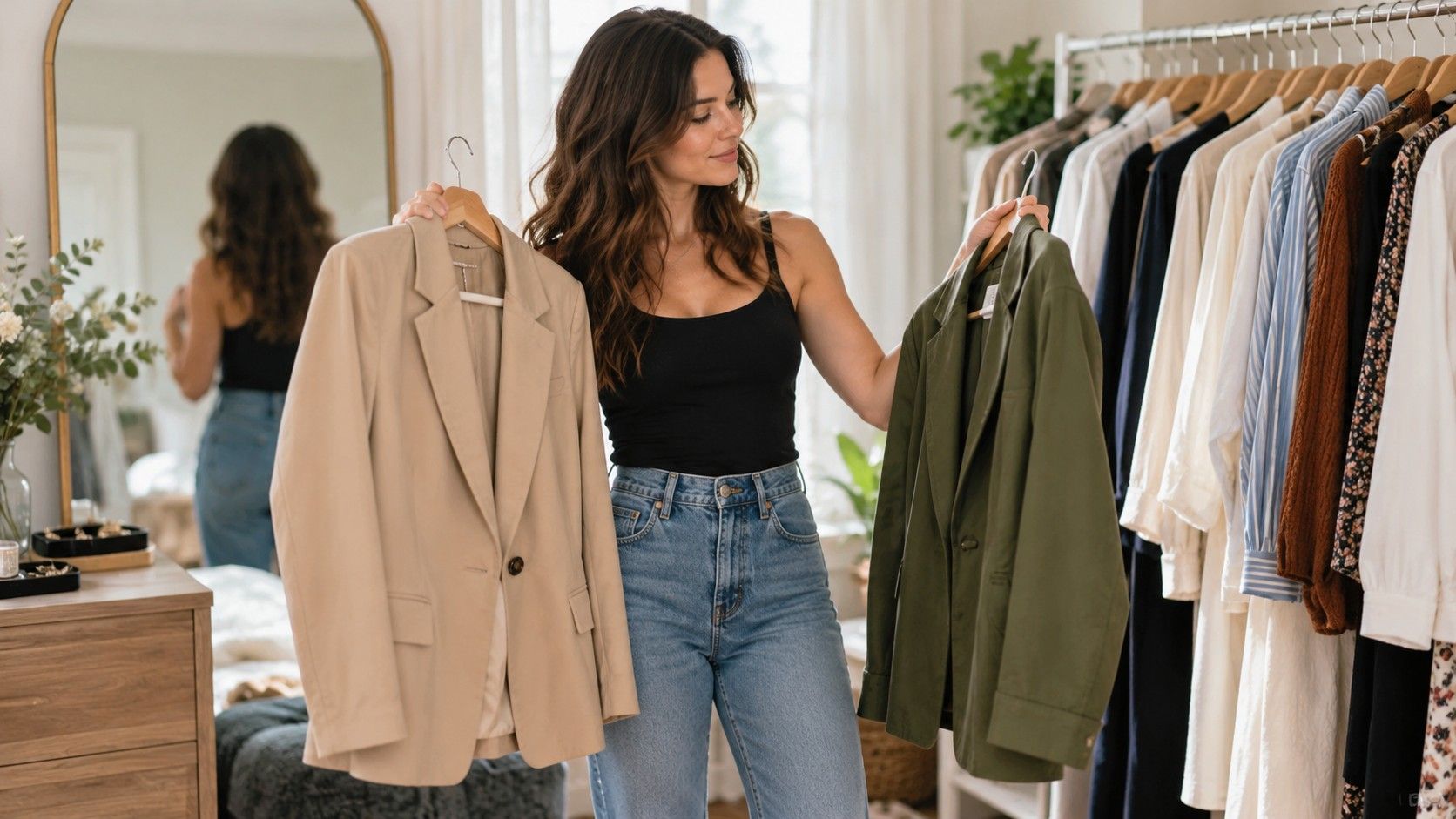
You can learn quite a lot from two outfits and a short note at the end of the day. The useful part is choosing one question and changing as little as possible around it. This wardrobe experiment separates fit, silhouette and color so you can understand why you reach for some clothes and leave others untouched, before buying anything new.
Choose one irritation that happens in real life
Start with something you can describe without a body-shape label. Perhaps your shirt pulls when you reach for the steering wheel, a tucked top needs constant rearranging or you keep rejecting a pale jacket once it is on. Pick one issue for the first experiment. Trying to decide your ideal silhouette, seasonal palette and entire personal style at once produces a pile of impressions that are hard to use.
Write a simple question: would a looser upper sleeve make this work shirt more comfortable? Or: do I prefer this outfit with a clearly defined waist? The first is mainly a fit question; the second is a silhouette preference. That distinction matters. You can dislike an outline even when the garment fits well, and you can enjoy an outline while finding its waistband uncomfortable.
Choose a normal day for the test. A long walk, a desk afternoon or a routine shopping trip gives clothes a job to do. Avoid using a special occasion as the first trial of a doubtful fit. I would rather discover that a wrap top opens when bending while I am at home than during a crowded dinner. Leave enough time to change if the outfit becomes uncomfortable.
Keep color familiar while you compare the fit
For the first comparison, use two garments in similar colors and with a similar role. Two blue shirts are easier to assess than a fitted black blouse against a loose bright orange tunic. Note the differences you cannot control, such as fabric weight or sleeve construction, so you do not attribute every change to the size.
Wear the same trousers, shoes, underwear and outer layer for both versions. Reach forward, bend your elbows, sit and take a few strides. Check the shoulder seams and upper back, the waistband while seated and the hem when moving. A dropped shoulder is intentional in some designs; a fitted shoulder seam behaves differently. Judge whether the cut works as designed and feels comfortable rather than applying one seam position to every shirt.
If you are comparing waist definition, use one outfit and change its styling. Photograph the top loose, then tucked, then loosely belted if that is an option. Keep the belt comfortable rather than tightening it to force a shape. If the tuck creates bulk, try a different amount of fabric or a thinner top. Your observation might be that the fabric resists the styling, rather than that the whole silhouette is wrong for you.
When the available clothes differ substantially, make a modest conclusion. You can say you prefer this particular fluid shirt to this particular crisp one. You cannot isolate fabric, cut and size from that comparison alone.
Compare color without redesigning the outfit
For a color test, keep the neckline and silhouette as similar as your wardrobe allows. Try two plain tops with the same trousers, or hold two scarves across the same top. Stand near a window in indirect daylight and use the same mirror. A brightly colored wall, direct sun or a warm ceiling light can change how both the fabric and your face appear.
Choose one color question. You might compare a clear blue with a softened blue, a light shade with a deeper one or two colors with different warm-cool impressions. Changing all those qualities at once makes the result harder to describe. Store labels such as sage, rose and stone are approximate names, so look at the cloth you have rather than assuming the label places it in a particular seasonal palette.
Keep makeup and accessories consistent if you want a closer comparison. Look for a preference you can put into words: this color feels calmer, this contrast looks more deliberate with the trousers, or this shade works better with the lipstick I usually wear. Avoid turning the exercise into a search for flaws in your face. Personal color systems can offer ideas, but this home comparison does not diagnose a season or establish an objective best color.
A phone photograph can help you remember the combinations, though automatic exposure and white balance may shift between shots. Use the same position and lighting, disable beauty filters and compare the mirror view as well. If the results vary between morning light and an indoor evening, keep that context in the note. It may explain why one garment works well for dinner and another is your daytime favorite.
Give the outfit a small movement test
A fitting-room pose is a narrow sample of wearing clothes. Before committing to a day, sit in the outfit for a few minutes, reach toward a shelf and walk up a step if one is available. Carry your usual bag. See whether the neckline shifts, the trousers catch under a shoe or the jacket pulls over the inner sleeves. These checks make the comparison relevant to the way you move.
Separate discomfort from maintenance. A waistband that digs in needs a different response from a shirt that wrinkles. Record the irritation in concrete terms: adjusted the sleeves three times during lunch, or could not reach forward comfortably with the jacket fastened. A phrase such as bad outfit gives you little to work with later.
You do not need to continue wearing a garment that hurts, restricts you or leaves you feeling exposed. Change and keep the observation. For less urgent issues, see whether a small adjustment helps: loosen a tie, release a tuck or remove a bulky inner layer. Note the change rather than treating the rest of the day as a test of the original version. The point is to learn, not to endure the outfit.
Write a record short enough that you will use it
Take one front photograph if you want it, and make three short notes at the end of the day: what you changed, what happened and what you would repeat. Keep the language about the clothes and your experience.
| Question | Change made | Observation | Possible next test |
|---|---|---|---|
| Does a tuck help this outfit? | Same shirt tucked into the same trousers | Liked the division, disliked the bulk | Try a thinner shirt before changing the trousers |
| Why does the jacket feel tight? | Changed a gathered blouse for a simple sleeve | Reaching felt easier | Compare another inner layer before buying a larger jacket |
| Which blue do I prefer? | Similar tops in muted and clearer blues | Preferred muted blue with these grey trousers | Try both with a different familiar bottom |
| Why do I avoid these trousers? | Wore them for a seated work session | Waistband pressed while sitting | Compare another rise or waistband cut |
A repeat observation deserves more weight than a one-off mood, though it still does not become a universal rule. If you like the same open neckline across several outfits, that is a useful preference. If a single shirt fits poorly, it does not prove every shirt with that neckline will fail. Keep conclusions as specific as the evidence allows.
After two or three trials, stop and read the notes together. Body shape, personal style and wardrobe choices become easier to connect when the record describes actual garments: a shaped waistband, a softer shoulder, a quiet color contrast or a hem that clears your shoes.
Turn the result into one useful shopping sentence
Use the observations to describe the next garment you need. For example: a blue work shirt with room through the upper sleeves, a hem short enough to wear loose and fabric that does not need careful pressing. That sentence directs a fitting-room search much better than a general request for clothes that suit your body shape. It also makes it easier to walk away from a beautiful piece with the same old problem.
Check whether an alteration or different styling solves the issue first. Shortening a simple hem may be feasible, while changing shoulders or a complex closure can involve more work. Ask a tailor about the actual garment if you are considering it. Temporary folds and gentle adjustments can help you see a possibility, but avoid treating a pinned version as proof that an alteration will be straightforward.
Take the partner garment to the shop, or wear it when trying candidates. Use your movement checks again and read the care instructions. A color you enjoy is less useful if the fabric needs a washing routine you will not follow. If the garment does not address the missing job, leave the decision open. The experiment does not require a purchase to count as useful.
Keep room for exceptions. You may happily choose a bold color for a party or a dramatic shape that needs more care than your everyday clothes. The experiment gives you a clearer view of those choices, rather than a new set of restrictions. Its best result is a wardrobe that asks fewer questions on an ordinary morning because you understand what the clothes can do.