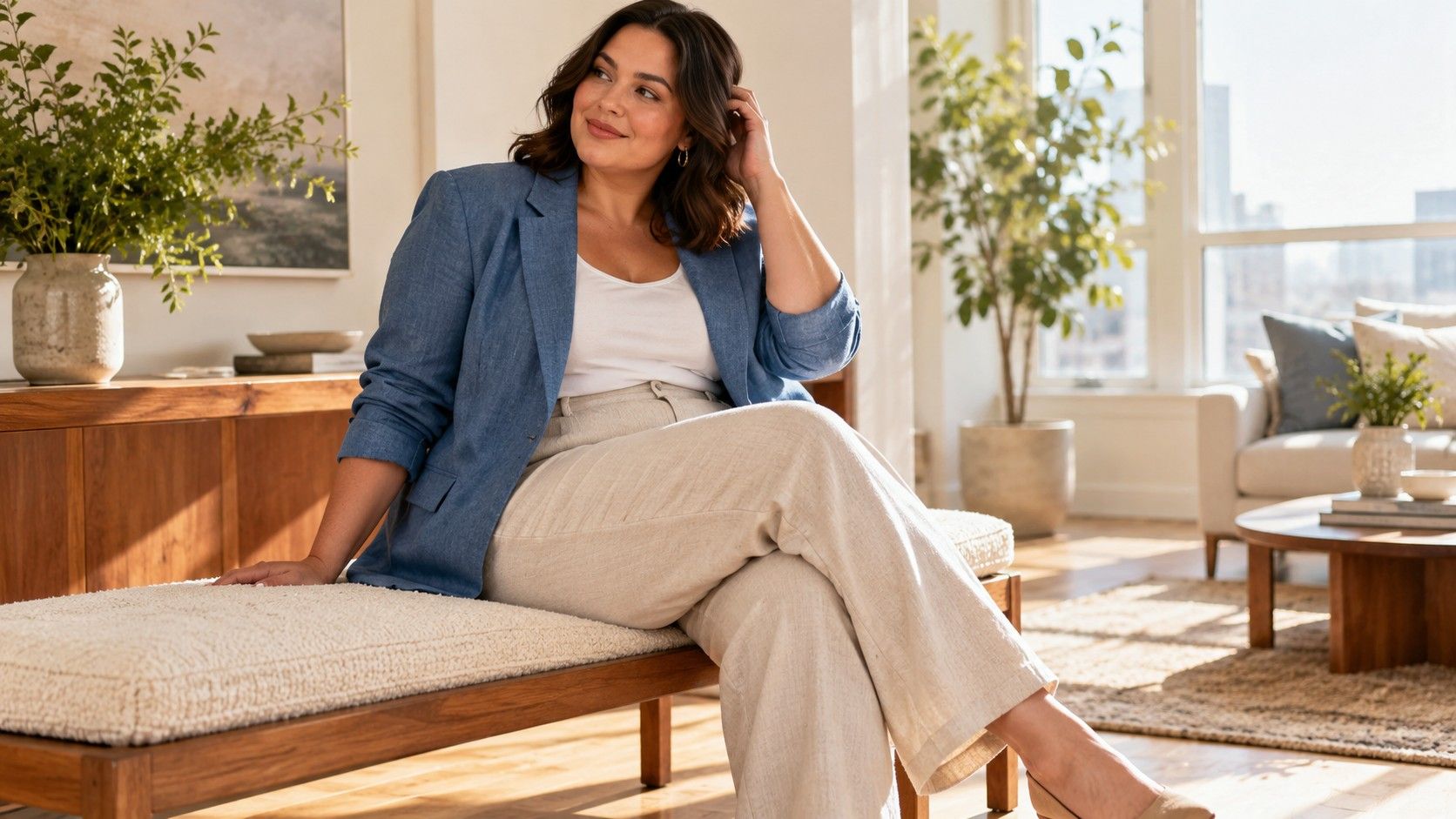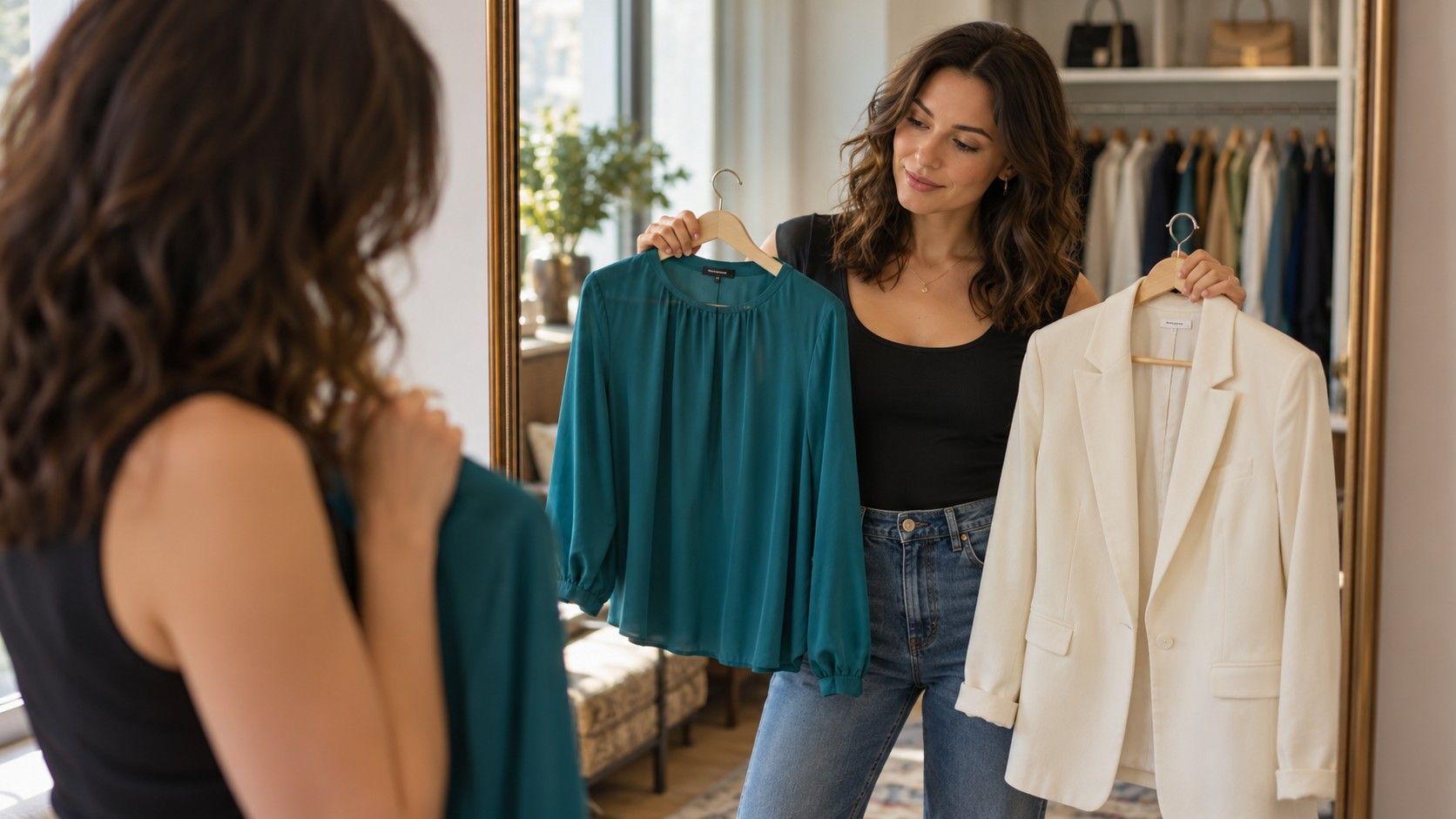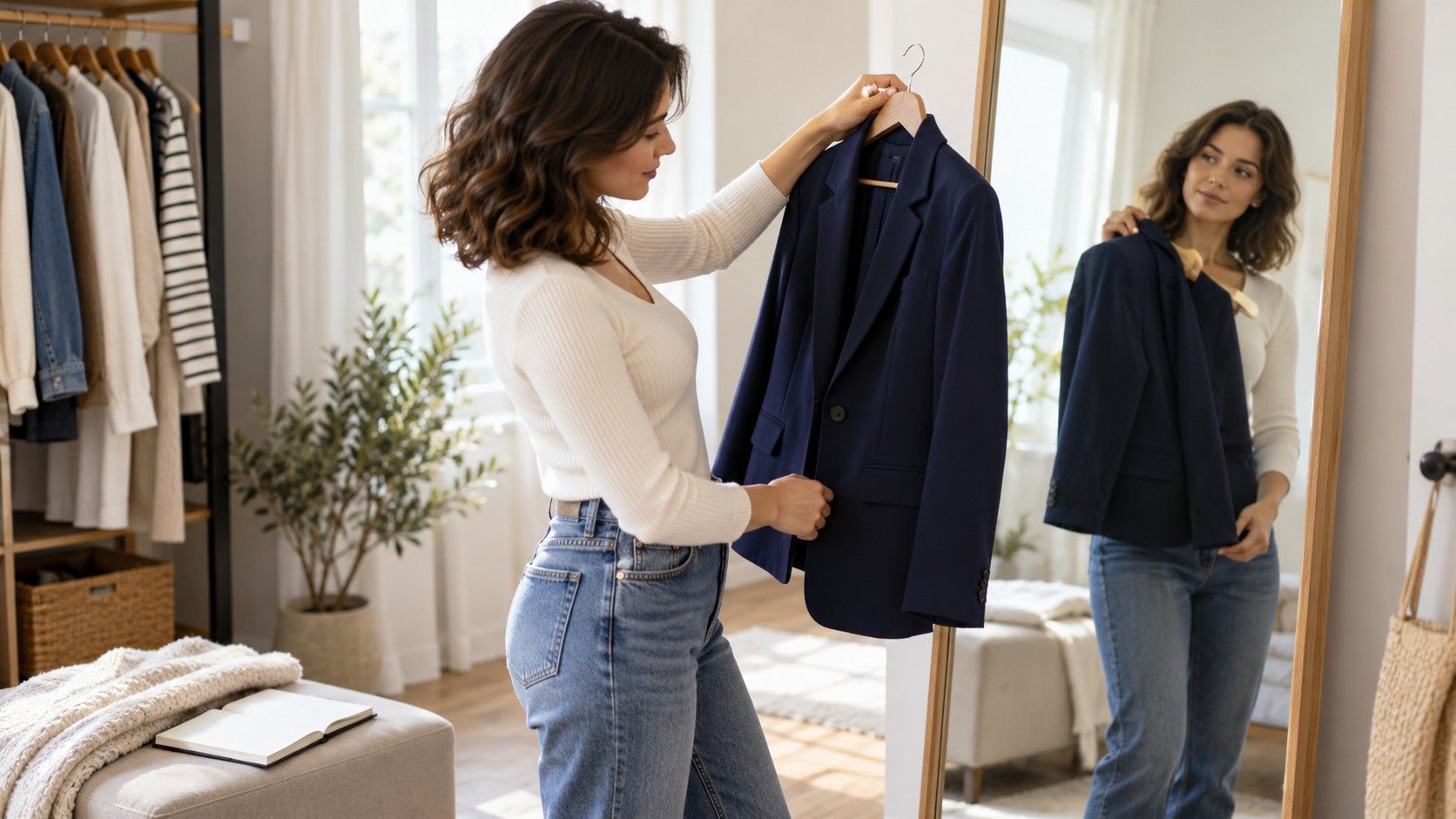
A styling suggestion can look convincing on a screen and still fail when you sit down, reach for a shelf or put on your coat. I would use AI to generate a few specific outfit experiments, then let clothing fit and comfort decide what survives. Before sharing a photograph or buying a recommended cut, it helps to know which questions an image can leave unanswered.
Decide what you want the suggestion to help with
“What should I wear?” gives a tool plenty of room to invent assumptions. A narrower question is easier to test: suggest three ways to wear these straight trousers with a washable top for a warm office. Include the clothes you own, the weather, your dress code and what feels uncomfortable. Those details give the advice a practical job instead of asking it to judge your body.
People searching for AI fashion recommendation, body shape and color analysis images may want several different things: outfit ideas, a color comparison or help understanding a poor fit. Separate those tasks. A suggestion about combining a navy top with olive trousers is different from an assertion that a photograph proves your body type. You can accept the useful outfit idea without accepting the classification.
Ask for alternatives and reasons you can inspect. “Try a shorter outer layer so more of the trouser line is visible” points to an observable change. “This is the perfect shape for you” gives you nothing to test. Words such as perfect or flattering often hide assumptions about which proportions a person should want. State your own aim, whether that is more volume, less bulk, a visible waist or a relaxed outline.
Keep the first round small. Three combinations using existing pieces are enough. A long shopping list can feel productive while giving you little evidence about whether the underlying recommendation works. Save a sentence about your actual preference after trying the clothes; you can use that information in the next question.
Understand what an outfit photograph leaves out
A photograph records one view in one moment. It does not show how a waistband feels after lunch or whether a sleeve restricts your reach. Camera angle, distance, pose and clothing can change the apparent relationship between different areas. A close, low-angle picture and a more distant eye-level picture are poor bases for comparing proportions.
Fabric behavior is also difficult to judge from a still image. A soft blouse can cling briefly to the trousers underneath; a coat can stand out because the pocket contains a phone. Neither detail establishes your body shape. If a recommendation assumes what your waist or shoulder looks like under loose clothing, treat the assumption as uncertain rather than trying to satisfy it.
For color, lighting and image processing add another layer of uncertainty. Warm indoor bulbs can shift the appearance of a neutral fabric. A camera may change exposure between a dark top and a light one. An uploaded picture therefore should not be treated as proof of your skin undertone or a seasonal category. If you enjoy palette language, use it as a starting point for comparing real fabrics.
Even a visually plausible generated outfit does not demonstrate that a garment exists in your size or behaves as shown. Look for the actual product measurements, construction and fabric information if you decide to shop. A styled image is an idea about appearance, while a wearable outfit has to work through movement, weather, washing and a full day.
Prepare a comparison that changes one thing
Choose one familiar bottom garment and a pair of shoes. Compare two tops while keeping those pieces and the lighting the same. Stand naturally, place the camera at a consistent height and distance, and include the full outfit if hem length is the question. You do not need a face picture to compare a trouser break or jacket length.
Use the mirror alongside any photograph. Take a side view if you want to check bunching at the waist, then sit down and reach forward. You may discover that the image you preferred comes from a top that needs constant adjusting. That observation should outweigh a confident recommendation. The tool cannot feel the armhole against your skin.
When asking for feedback, name the change you are comparing: “Which jacket leaves more of the inner outfit visible?” or “Describe the difference between the tucked and untucked hem.” Ask for description before judgment. A specific visual observation can help you decide; a ranking of your body or an instruction to hide a feature need not become part of the exercise.
Write down what you notice without demanding a final label. For example, you might like the shorter jacket with one pair of trousers and the longer one with a dress. That is a coherent wardrobe preference. You do not need every successful combination to follow the same proportion formula.
Check shopping advice against a garment you own
If a tool suggests a wider leg, a fitted blouse or a higher rise, translate the description into something you can compare. Lay a comfortable garment flat and measure the relevant areas consistently. For trousers, waist, hip, rise and inseam can help; for a top, compare chest width, shoulder placement and length. Follow the retailer’s own measurement method where it is provided.
Body measurements and finished garment measurements answer different questions. Clothes usually need some room for movement, and the appropriate amount depends on cut, stretch, fabric and preference. A body measurement matching a garment measurement does not automatically mean a comfortable fit. Compare with a piece you actually wear, then read any available information about stretch and intended fit.
| Recommendation | Check with real clothes | What an image cannot settle |
|---|---|---|
| Try a shorter jacket | Pin or fold a hem temporarily | Sleeve room and comfort with layers |
| Choose higher-rise trousers | Compare rise with a comfortable pair | Waist pressure when seated |
| Use softer fabric | Touch, move and sit in the garment | Cling, friction and care requirements |
| Wear a warmer color | Compare actual fabrics in similar light | A reliable undertone classification |
Before ordering, check the return conditions and the total purchase you are comfortable making. There is no reason to buy several versions merely because a recommendation sounds certain. If measurements are missing, the uncertainty remains. You can ask the seller or choose a piece with enough information to judge it, rather than filling in the gaps with a virtual outfit preview.
Share less personal information and test without buying
Before uploading a photograph, read the service’s current information about storage, deletion, sharing and image use. If you cannot find an answer that matters to you, use a text description or a photograph of the clothes laid flat. A service’s friendly interface does not tell you how it handles an image. Avoid assuming that a delete button answers every question about previous processing.
Crop out faces, addresses, documents and other people when they are unnecessary to the task. Use ordinary clothed outfit pictures if you choose to share any, and avoid sharing intimate images for a styling experiment. A headless crop can still contain identifying details, so check mirrors, badges and the background. Share only what you are comfortable providing to that particular service.
You can get useful ideas without sending a body photograph at all. Describe a knee-length skirt, a loose shirt, the shoes you own and the kind of outfit you want. Ask for two ways to combine them, with one change at a time. Try rolling a sleeve, opening an outer shirt or changing the visible hem. Each is a reversible experiment you can judge in person.
After wearing the outfit, record whether it stayed comfortable and whether you liked it in ordinary use. Reject advice that makes you feel judged or creates more work than it solves. The useful outcome is a combination you want to wear again, together with a clearer sense of your preferences. A style tool earns its place by helping you make those decisions; its confidence is not a substitute for your own experience.