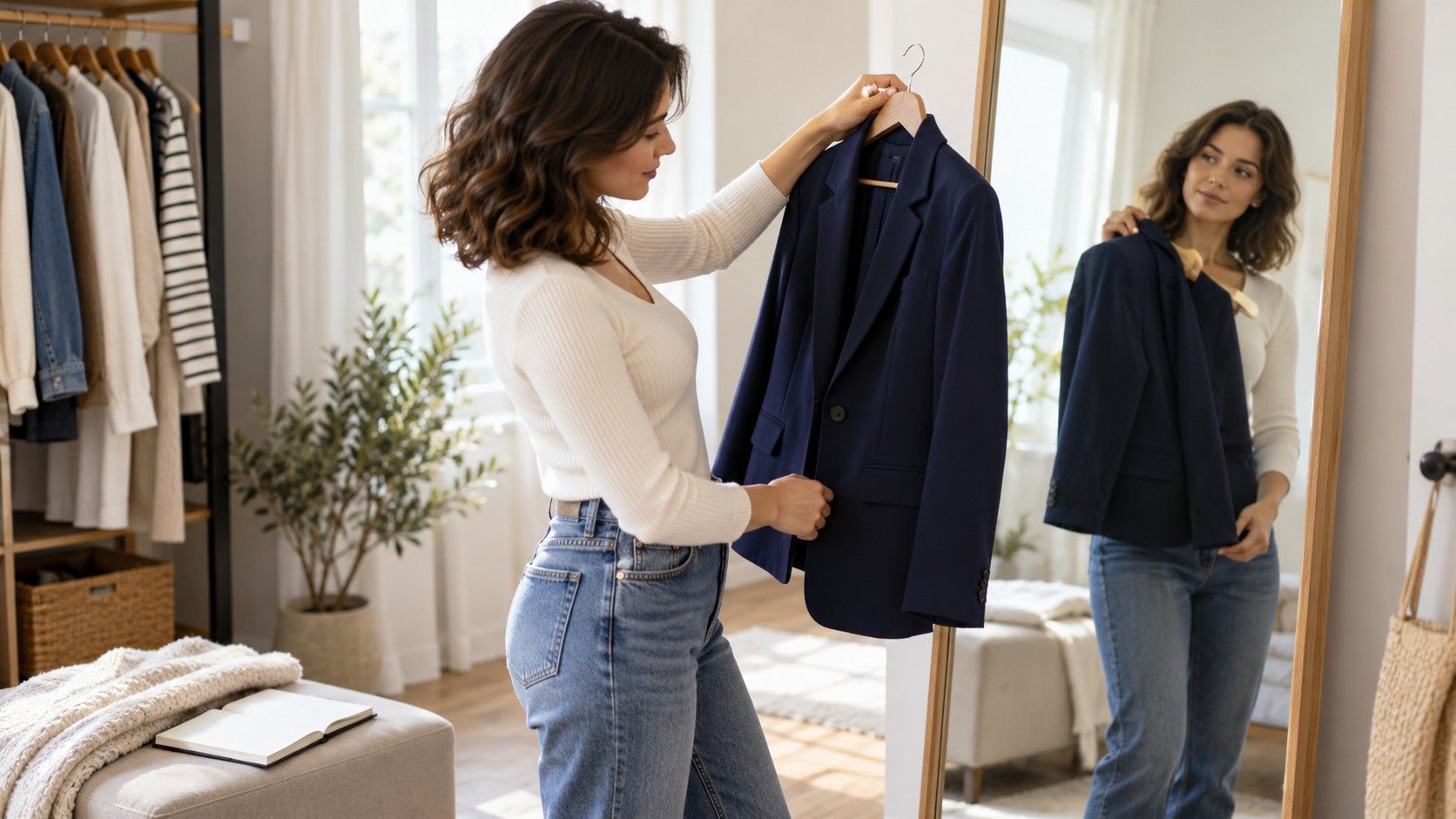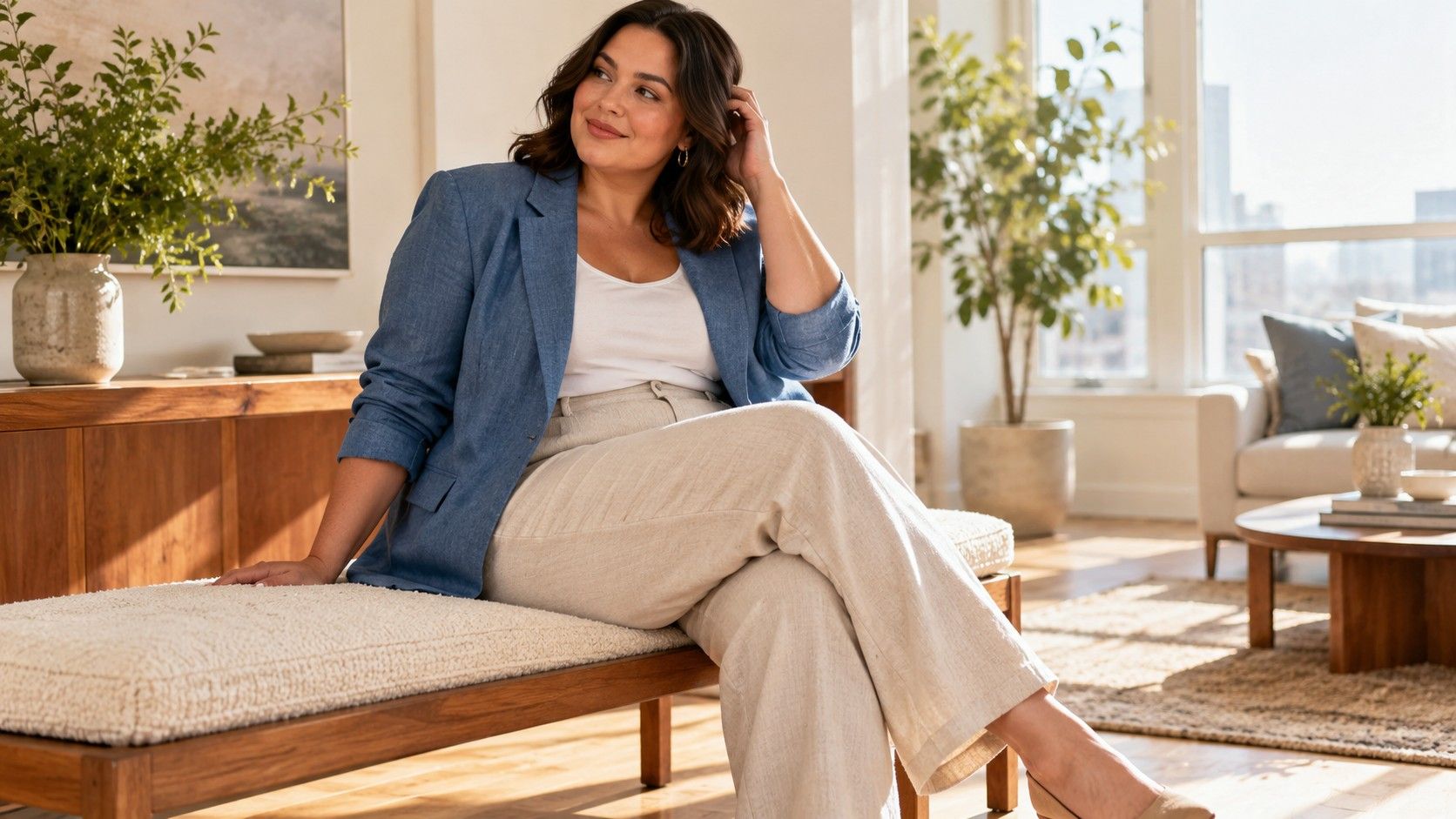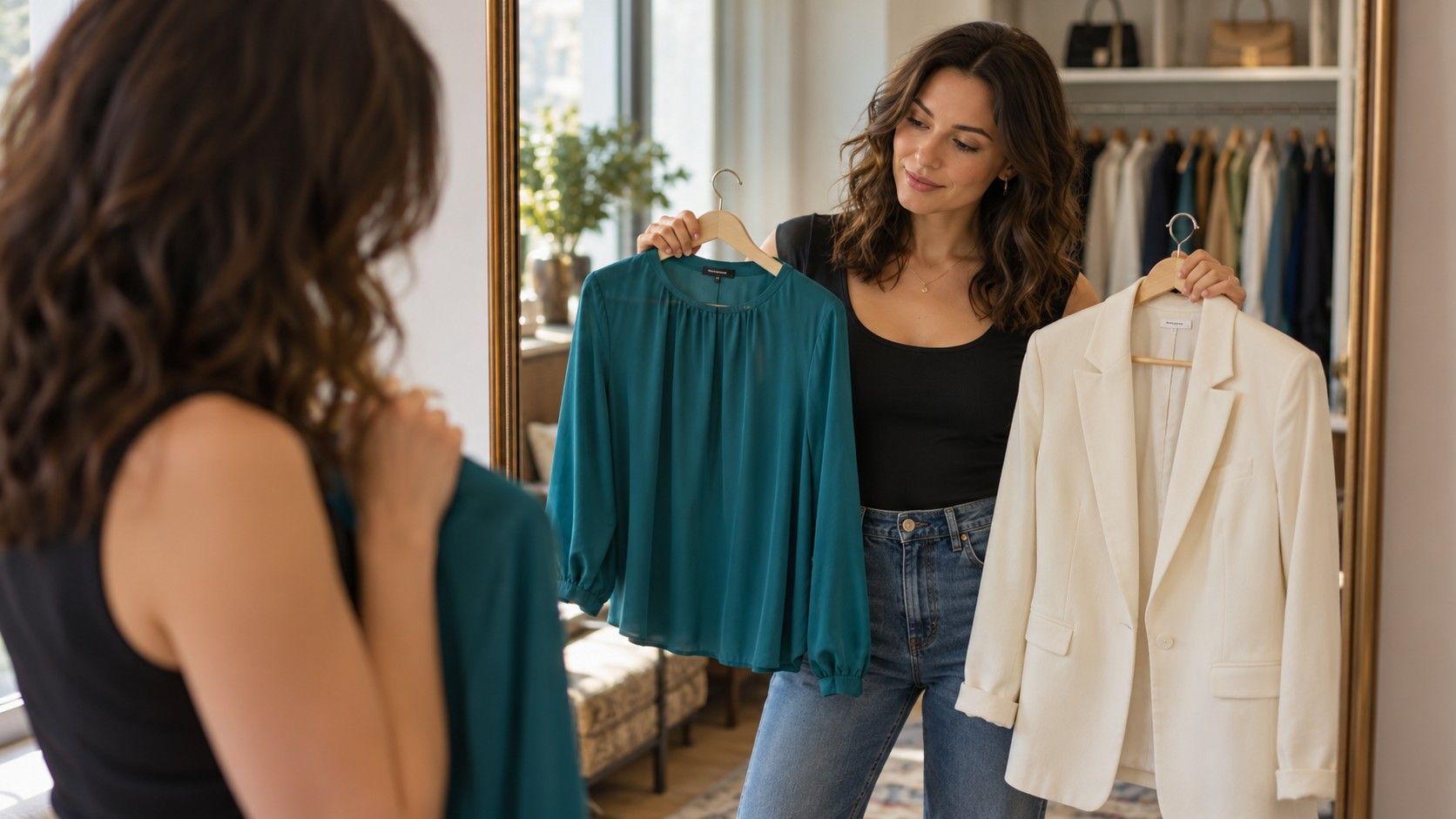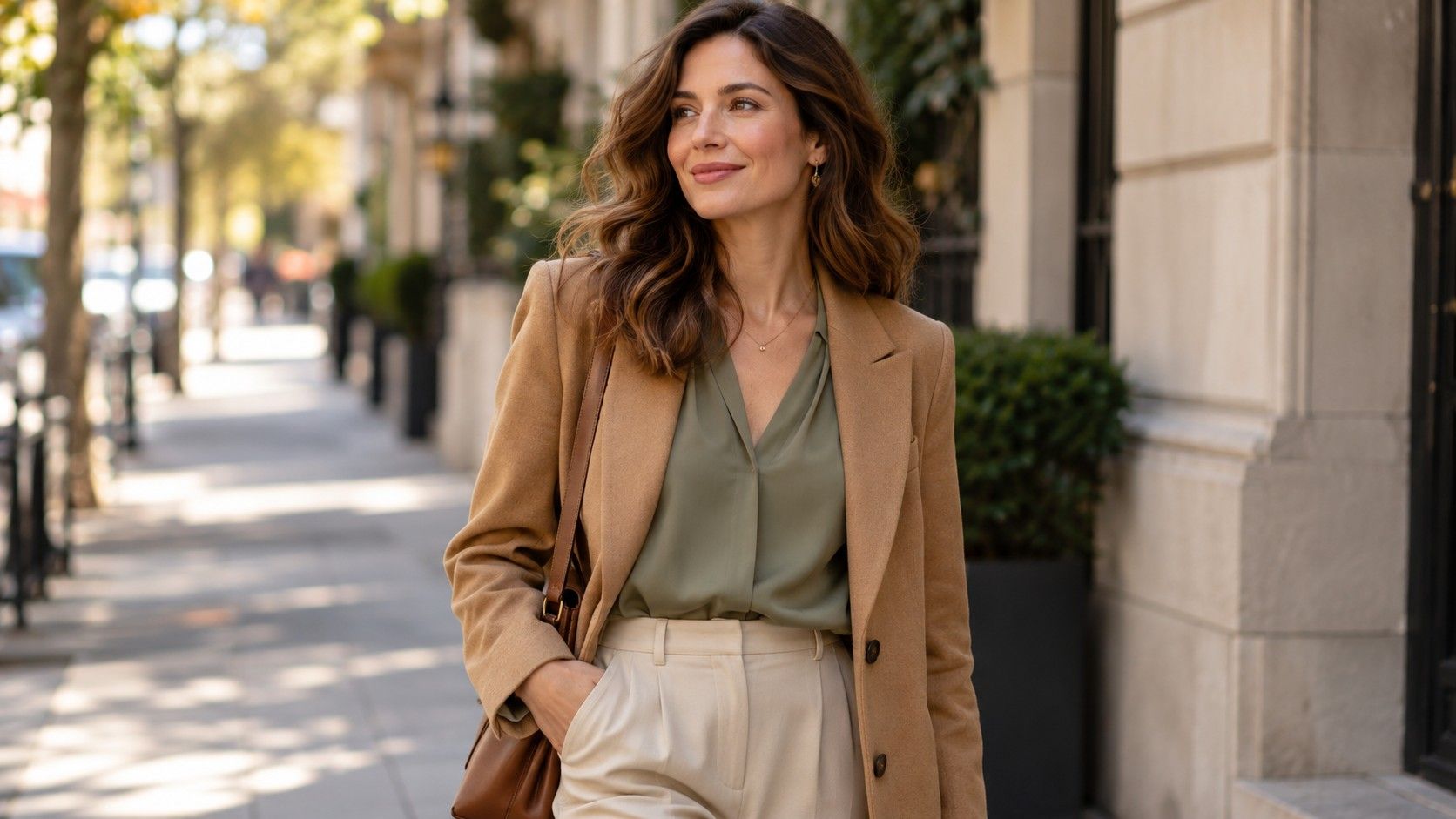
A quiet color palette can still produce an outfit with a clear shape. The useful work happens at the shoulder, waistband and hem, where small changes affect how the clothes hang. I would test a few moderate cuts in familiar colors before buying a wardrobe around two style labels.
Start with a familiar outfit and change its proportions
Soft Classic is often used in style conversations to describe balanced lines with some softness. Soft Autumn is a seasonal color term commonly associated with muted, warmer shades. Interpretations vary, and neither is a scientific classification of your body or coloring. If you are exploring a soft autumn soft classic wardrobe, treat those words as prompts for comparison rather than requirements you must satisfy.
Choose trousers and a top you already wear. Look at the outfit from the front and side, then try a shorter top or a shallow tuck. Next, return to the original top and change the trouser hem if you can fold it temporarily. Keep the shoes the same. This sequence shows you what each proportion does without mixing together several changes.
Moderate proportions do not mean identical proportions for everyone. A top that finishes at one person’s high hip can land at someone else’s fullest hip. Check the actual garment on you, including the rear view. If a hem catches instead of falling, try another length or a little more room. There is no need to explain that ordinary fit issue as a failure to match a style category.
Notice where your eye goes and decide whether you like that emphasis. A long cardigan may be exactly the relaxed feeling you want, even when a shorter jacket creates a clearer boundary. Write down the preference in everyday language. “I like this jacket open over these trousers” is a more useful finding than a score for how classic an outfit appears.
Use gentle shaping that survives sitting down
A blouse with a little shaping through the seams can suggest a waist without gripping it. Compare that with a straight shirt and a shirt gathered under a belt. Sit, reach forward and lift your arms in all three if possible. The belt may shift; the shaped blouse may pull at the buttons; the straight shirt may feel easiest. Those details matter more than the hanger silhouette.
Check the shoulder seam and armhole together. A seam sitting where you prefer it does not guarantee that you can move comfortably, and a slightly extended shoulder is not automatically wrong. Cross your arms and reach toward a shelf. If the top drags across your upper back, compare another cut rather than assuming you need to stand differently.
For dresses, observe where the waist seam lands when you move. It can ride upward, settle comfortably or feel restrictive after a meal. A wrap effect is one possible design, but you may prefer a fixed neckline and soft darts. The aim is a garment that gives the amount of definition you enjoy while allowing ordinary movement. Nothing about softness requires thin, clingy fabric.
If a piece fits well in most places, consider whether a straightforward alteration could help. A hem adjustment and a major reconstruction are very different projects. Ask a tailor what is feasible before buying a garment for its potential. I would be cautious about a sale item that needs its shoulders, waist and length changed at once.
Give muted warm colors enough separation
Try oatmeal with olive, a softened terracotta with warm brown, or a creamy top with a deeper muted skirt. These are color experiments rather than a mandatory palette. Shade names are imprecise: two items described as camel can look quite different together. Place the actual fabrics side by side in indirect daylight, then check them in the room where you get dressed.
If everything merges more than you enjoy, adjust depth before reaching for a bold contrast. A slightly lighter top can create a visible boundary with the trousers while keeping the overall mood quiet. Reverse the colors and compare. You may like the darker shade near your face, or prefer it in a lower garment. That is a personal choice worth testing.
Use a scarf to compare a candidate color near your neckline without committing to a coat. Keep the lighting, hairstyle and makeup similar between comparisons. A phone photo can help you remember a combination, but exposure and white balance may change the apparent colors. Let the mirror and your own preference remain part of the decision.
A favorite color outside an imagined palette still has a place. Wear it as a bag, a patterned detail or a full top if you enjoy the result. Style systems are most useful when they make getting dressed easier. If a palette exercise makes you reluctant to wear clothes you love, make the exercise smaller and return to the actual outfit.
Compare fabric and pattern at the same distance
A smooth knit, a soft woven blouse and a crisp shirt can create different degrees of structure in the same cut. Let the fabric fall from your hand, then try the garment over the underwear you normally wear. Very thin cloth can catch or show lines; heavier cloth can hold its own shape. Neither is inherently more suitable. Match its behavior to the outline and comfort you want.
For pattern, begin with a scale you already like. A small check or softened stripe can add interest without a large change in color depth. Stand back from the mirror as well as looking close up. A print that seems delicate on the hanger can read as busy over an entire dress, while a larger pattern may feel calmer because it has more space between elements.
Keep the rest of the outfit simple during the comparison. Try two patterned tops with the same trousers and shoes, or compare a patterned scarf with a plain one over one top. If you change the jewelry, neckline and jacket too, you lose a useful reference point. There is no fixed size of print that a style label can settle for you.
Check care and wear as part of the fabric choice. A blouse that wrinkles in a way you dislike after ten minutes in a chair may not be the right working-day piece. A knit that catches on a bag strap can be frustrating even when you like its drape. These practical details decide how often an outfit leaves the wardrobe.
Make the approach work on casual days
Balanced lines do not require office clothes. Start with straight jeans, a comfortable knit and shoes suited to your day. Compare the knit untucked with a shallow tuck, then add an outer layer. If you prefer a clear outline, try a jacket that does not overwhelm the inner outfit. If a longer layer feels better, keep it and simplify another element.
For errands, check pocket access and bag movement. A jacket can look tidy until the bag strap pulls its neckline sideways. Trousers can fit while standing yet catch at the knee when you climb stairs. A short walk, a seated check and a reach overhead give you useful evidence before you decide an outfit is finished.
| Daily situation | Useful starting combination | Check before leaving |
|---|---|---|
| Desk work | Soft woven top, trousers, light cardigan | Waist comfort and sleeve room when seated |
| Walking errands | Jeans, knit, practical shoes | Hem clearance and bag-strap movement |
| Casual dinner | Familiar trousers, softly shaped top | Neckline stability and comfort after sitting |
| Cool weather | Simple inner outfit and outer coat | Upper-back ease over real layers |
Repeat the combinations that work before adding more pieces. After a few wears, note a specific gap: perhaps the cardigan is too warm for your commute, or the trousers need a lighter top. Buy for that gap rather than for a complete imagined identity. A small wardrobe of dependable combinations gives you a better foundation for experimenting with color, texture and shape.