I find the familiar “balance your hips” advice less useful than a pair of trousers that stays comfortable when I sit down. If you use pear-shaped as shorthand for your proportions, start with garment fit: enough room through hips and seat, a waistband that works, and lengths you enjoy. You can choose a defined waist, a loose silhouette or a bold lower half. None requires hiding the shape you have.
Fit the garment where it needs the most room
Pear is a loose styling term usually used when the hips are more prominent relative to the upper torso. It does not describe every detail of a person, and you do not need to use the label. The recurring shopping question is often more specific: how do I get room through the hips and seat while keeping the waist comfortable and secure?
For trousers and fitted skirts, begin by checking whether the hips, seat and thighs have enough space for movement. Look at the side seams and pockets, then sit down. Pockets that flare or fabric that pulls may indicate a fit issue, although the cause can involve cut and construction as well as size. A waistband that closes is not enough evidence that the whole garment fits.
If a garment has room through the hips but gaps at the waist, compare a cut designed with a larger waist-to-hip difference. Brands use terms such as curvy inconsistently, so read the measurements and try the exact item. Moving up a size may add waist room you do not need, while moving down may restrict the seat. Sometimes a different pattern shape answers the problem more cleanly.
I also check fabric before deciding that the proportions are wrong. A firm woven fabric, a stretch denim and a fluid crepe will behave differently. Stretch may allow movement, but it does not guarantee a comfortable waistband or enough rise. Keep the actual garment under scrutiny. The body does not need to change to rescue a trouser pattern.
Compare rises at the place you actually want the waistband
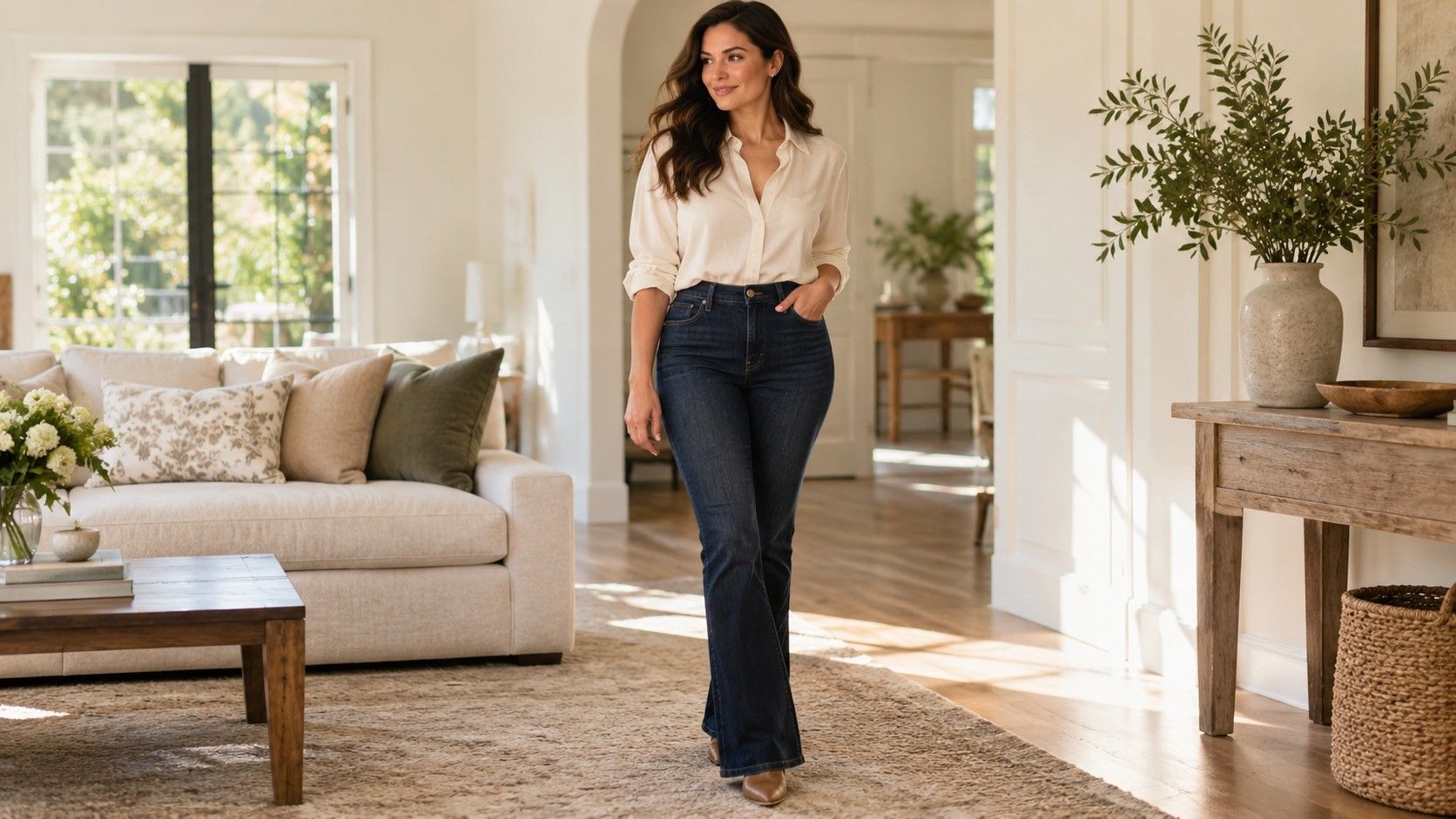
A high rise may sit near your natural waist, but the wording on a label does not guarantee where it will land on your torso. Torso length and garment construction affect the result. Compare the front and back rise as well as the waistband position. A pair that seems comfortable standing can pull down at the back when you sit.
Try a familiar top with each pair so the comparison stays readable. Check whether the waistband presses, rolls, slides or stays comfortable when you bend and sit at a chair. If you plan to tuck the top, test it tucked. Extra fabric inside the waistband can change how it feels. Wear the underwear you expect to use with the trousers, because seams and layers can affect the experience.
A lower or mid rise may be your preference, and it does not need to pass a body-shape rule. Check the circumference where that waistband actually sits rather than comparing it only with your natural-waist measurement. If it moves around during walking, investigate the cut and size. A belt can secure some garments, but it should not have to gather a large amount of fabric just to keep the trousers on.
Leg width is another independent choice. Straight, tapered and wide legs create different outlines and may offer different movement room. Compare the same shoes and a similar hem length where possible. A wide leg that drags underfoot needs attention regardless of how pleasing the still photograph looks. The useful choice is one you can walk in and want to wear.
Change the top length before replacing the outfit
When a top catches at the hips, I first check its circumference and hem construction. A narrow band at the bottom can make an otherwise roomy top ride up. Side slits, a different hem shape or more room may help, but the effect depends on the garment. Pulling the top down every few minutes is a practical reason to reconsider it, not a verdict on the shape underneath.
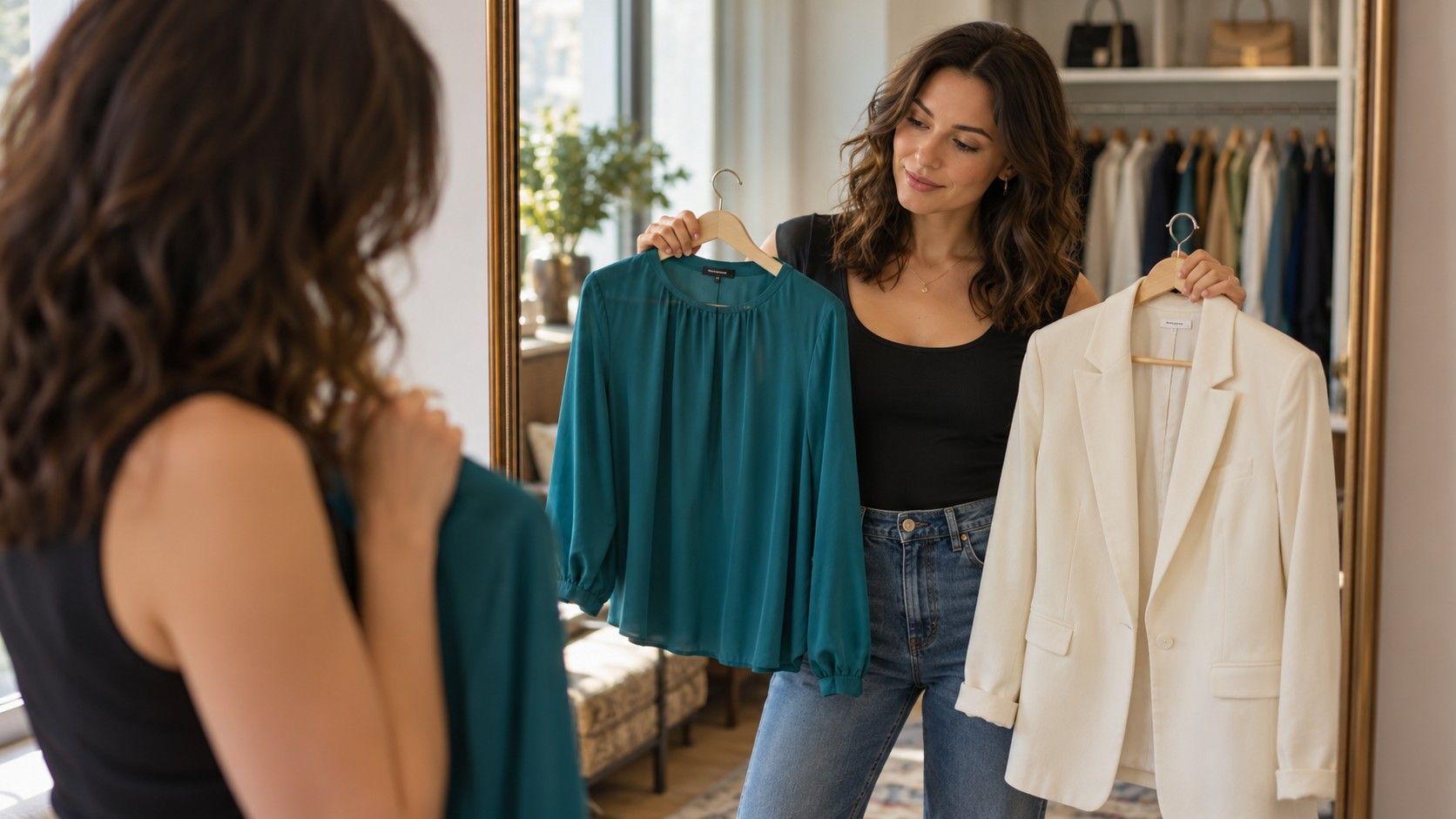
Compare the top untucked, fully tucked and with a small front tuck. Keep the trousers and shoes the same. The visible waistband and amount of fabric can change the outfit’s proportions without a purchase. If you enjoy a defined waist, try that effect. If you prefer a straighter or looser silhouette, let the top fall freely and assess whether it moves comfortably.
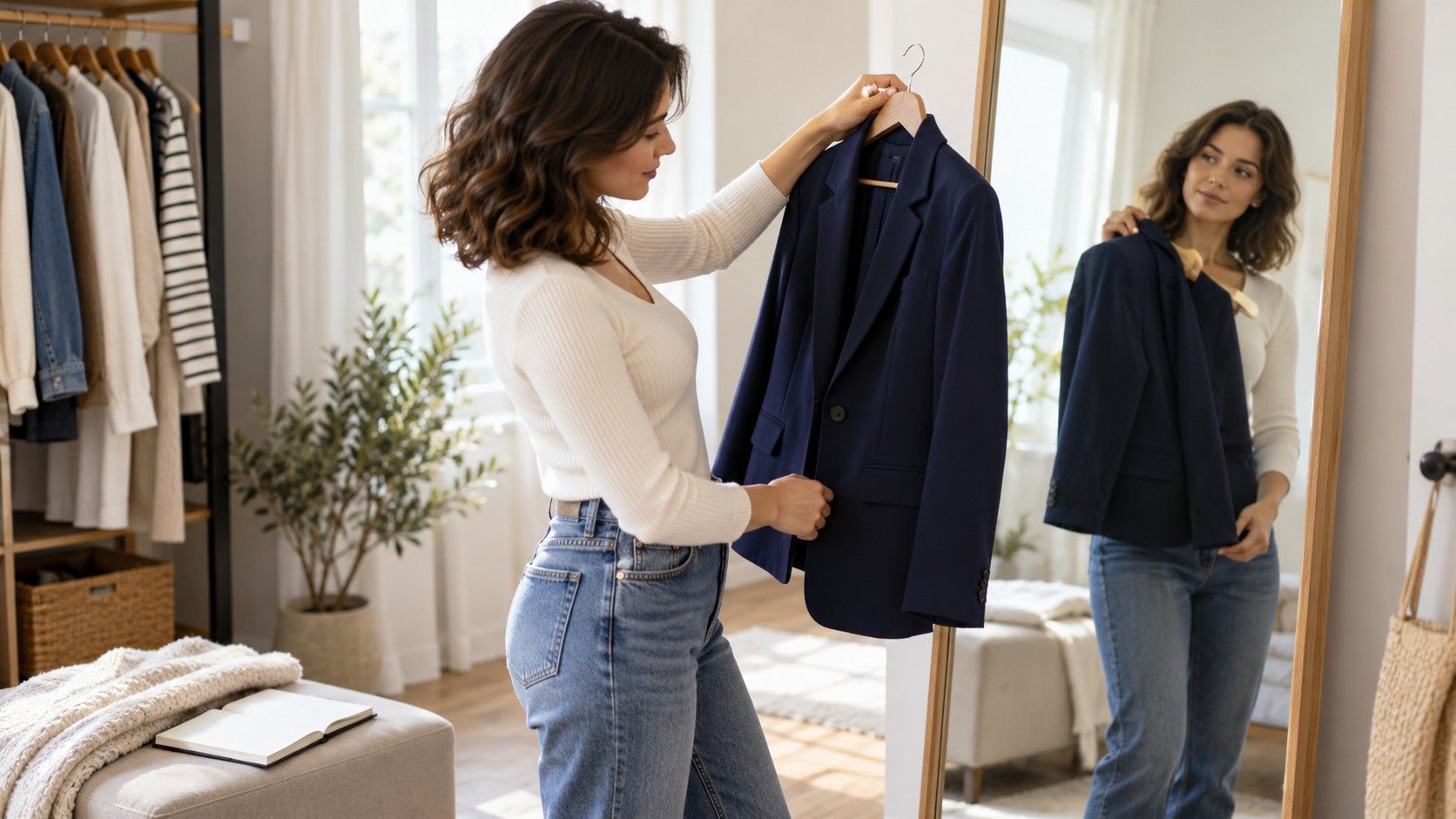
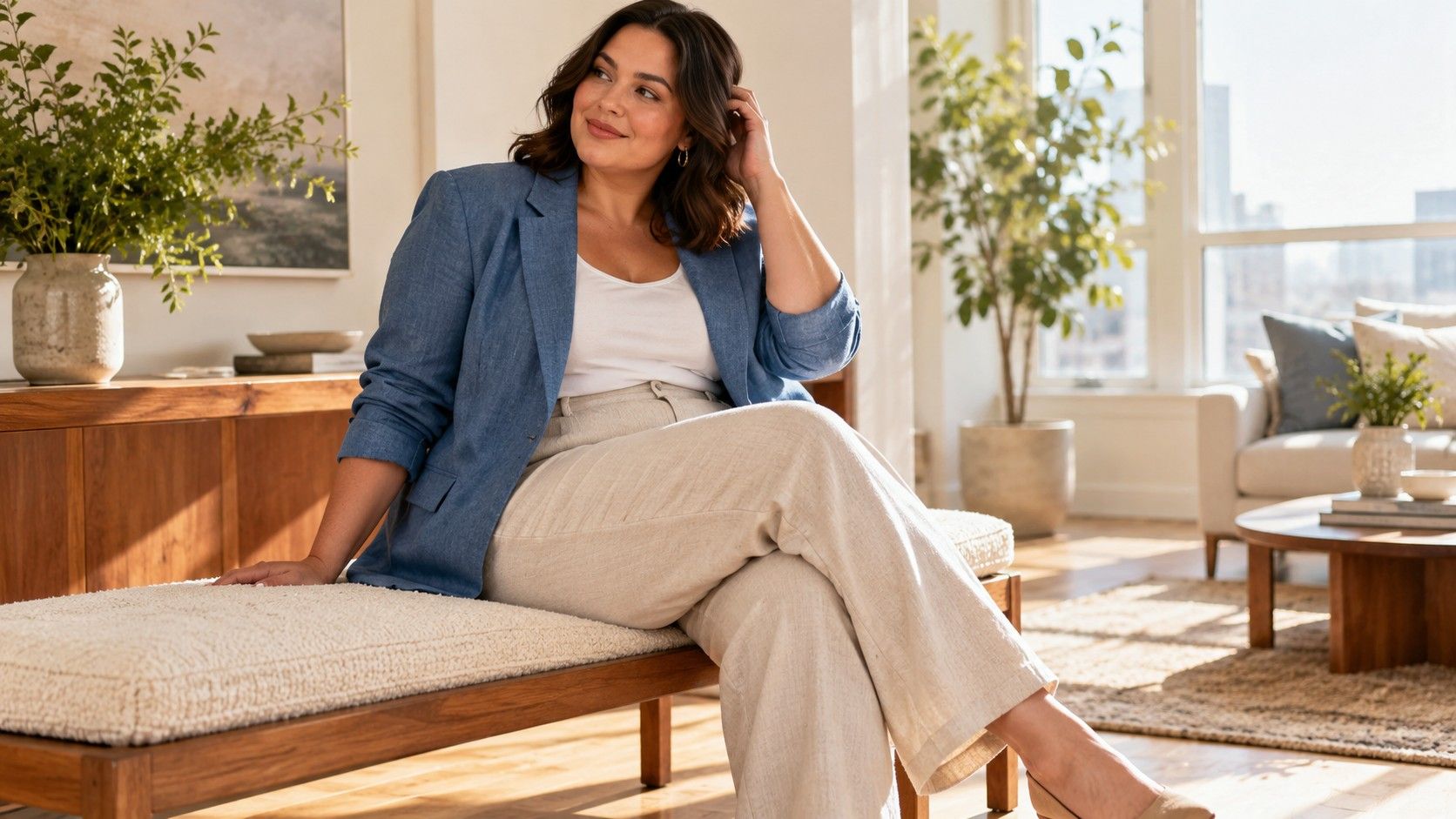
Jacket length also deserves an actual test. A hem ending around the hip may be exactly what you enjoy; there is no universally wrong stopping point. Try the jacket open and closed, then look from the side and back. Check whether the shoulders fit and whether the lower closure pulls. A jacket fitted only to the waist can be too tight farther down.
Advice about pear body shape outfits often recommends drawing attention upward. You can use a bright shirt, a broad collar or a statement earring if you want that emphasis. You can also wear patterned trousers and a quiet top because you like them. An aesthetic suggestion is useful only when it serves your chosen effect; your hips do not need to disappear for an outfit to work.
Choose dresses by their seams and movement
A dress has to accommodate several areas at once, which is why a good waist measurement alone does not predict the fit. Check shoulders or straps, bust, waist and hips independently. If the upper half is comfortable but the skirt pulls, a different skirt cut may help. If sizing up leaves the neckline loose, consider another design instead of accepting a compromise you will constantly adjust.
A gently flared skirt can provide room through the hips, while a straight dress can work with suitable dimensions and ease. Neither shape is compulsory. Look at where the waist seam sits on your torso, whether the fabric hangs freely and whether the skirt allows a comfortable stride. A fitted dress may need a vent or other construction feature to support the movement you expect.
Wrap and adjustable styles can offer flexibility, but check their coverage in a seated position and while walking. The tie should feel secure without uncomfortable pressure. A wrap dress is not automatically an easy fit for every person or every bust and hip proportion. I would test it with the shoes and underlayers intended for the occasion, especially before relying on it for a long day.
For a dress with a zip, close it gently and assess the surrounding fabric. Being able to fasten it does not mean there is enough room. Pulling at the hips, twisting side seams or a waist seam that shifts as you move can all deserve another look. Consider comfort across an ordinary meal and a chair, not just a standing pose in the mirror.
Decide whether an alteration solves the real problem
A modest waistband adjustment may be worth discussing when the trousers fit well elsewhere. The feasibility depends on the seam allowances, pockets, belt loops, lining and overall construction. Ask a tailor to inspect the garment before buying it for that purpose, where possible. An alteration estimate should be part of the purchase decision rather than an assumption made afterward.
| What happens in wear | What to compare first | When to ask about alteration |
|---|---|---|
| Waist gaps while hips feel comfortable | A cut with a different waist-to-hip relationship | If the rest of the garment works well |
| Fabric pulls across seat or thighs | More room, another cut or another fabric | Only after checking available seam allowance |
| Top repeatedly rides up | Hem width, length and fabric | If a specific construction change is feasible |
| Trouser hem catches under shoes | Intended footwear and finished length | When the fit above the hem is comfortable |
| Dress fits hips but neckline is loose | A different design or separate pieces | After inspecting the upper construction |
Be cautious about treating every mismatch as a small sewing job. Changing a waistband does not necessarily fix a rise that pulls, and shortening a top does not provide more hip room. Name the actual problem and ask what the proposed work will change. If the answer requires rebuilding several parts of the garment, another item may be a more sensible starting point.
Build an outfit you can repeat on an ordinary day
Choose one bottom that stays comfortable through sitting and walking, then compare two tops you already own. Note the hem length, tuck and layer that you prefer. Keep the outfit on for a routine task if you can. The combination that looks good for a photograph but needs constant pulling may be less useful than the one you forget about while going through your day.
Keep notes about garments rather than rules about your body: “this waistband stays put,” “the jacket closes comfortably,” or “the shorter top works with these trousers.” You may find several silhouettes that suit different moods and occasions. The aim is a wardrobe with reliable options, including a visible waist when you want one and room through the hips whenever the clothes need it.