When a jacket fits through the shoulders but feels loose at the waist, the answer is rarely a better body-shape rule. It is usually a question about the garment’s cut. Inverted triangle clothing advice becomes useful when it helps you find room to move and choose an outline you enjoy, without treating broader shoulders as something to hide.
Start where the garment holds you back
Inverted triangle is a broad styling label often used when the shoulder area appears wider than the hips. It says little about your bust, posture, torso length or preferred fit. People who use the same label can need very different clothes. Treat it as a search term for possible ideas, rather than a diagnosis or a reason to follow a fixed list of necklines and trousers.
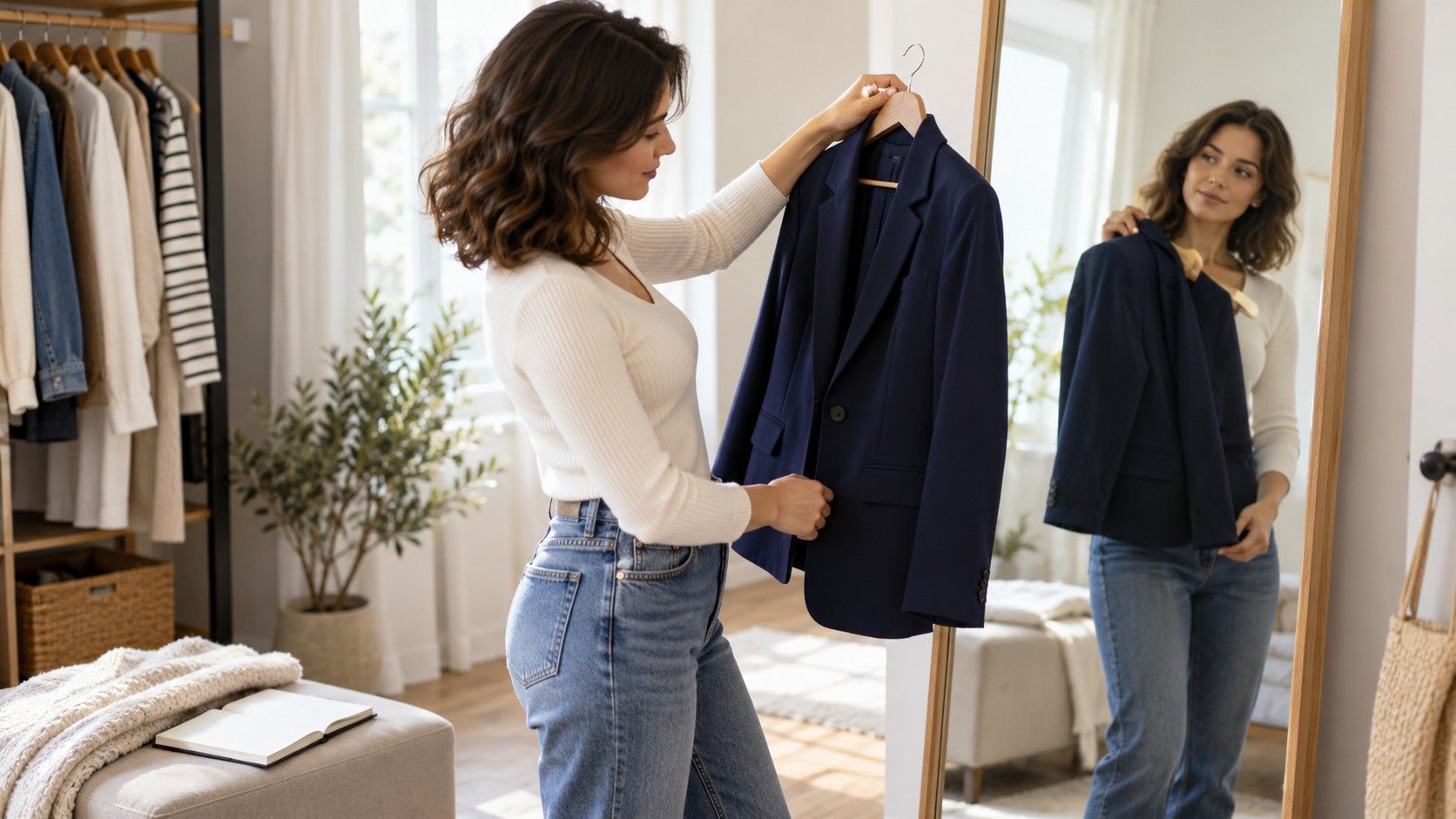
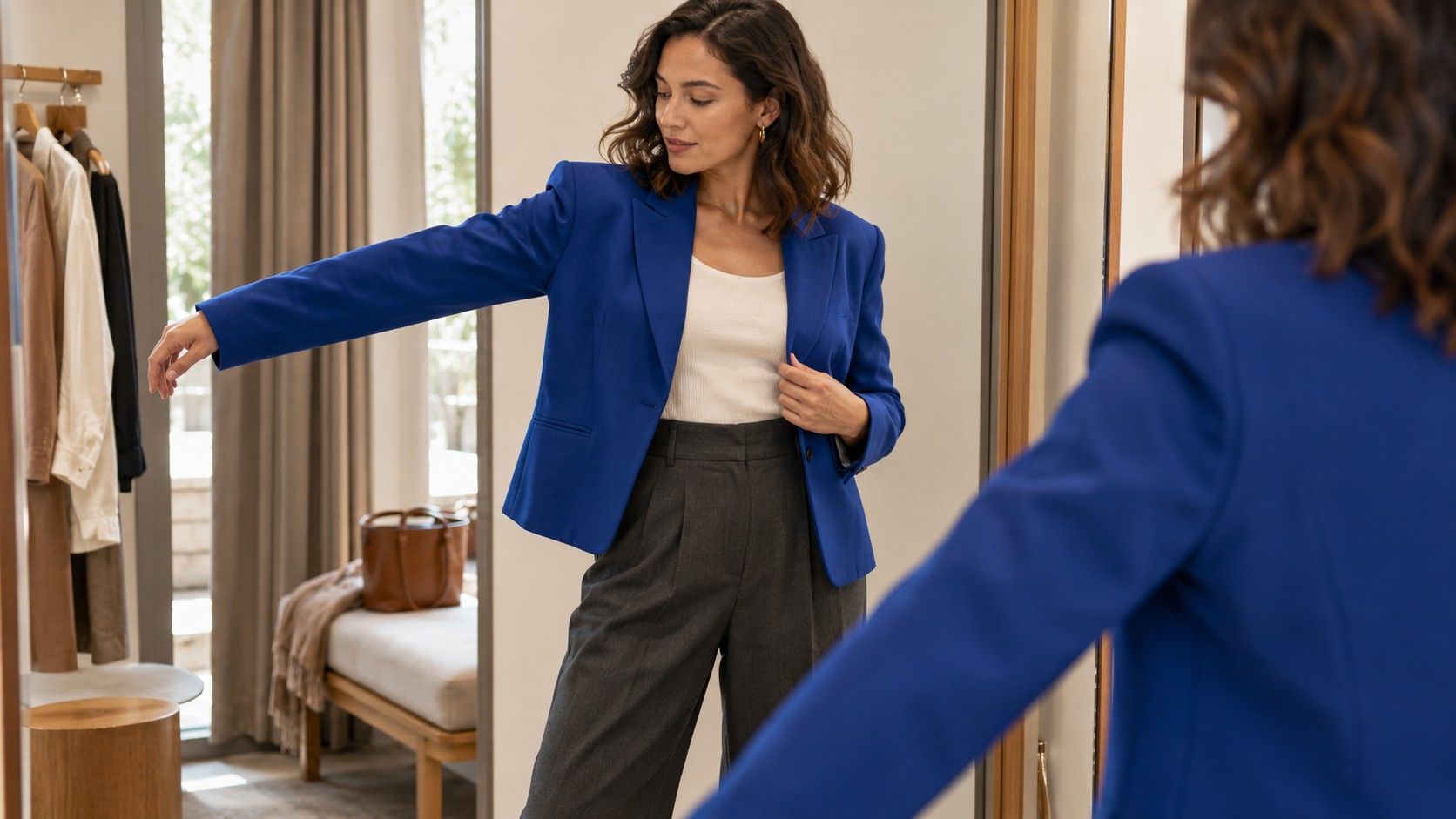
With a shirt or jacket, reach forward as though holding a steering wheel. Then lift your arms gently and sit down. Notice where the cloth pulls: across the upper back, beneath the arm or at the front closure. A fitted set-in shoulder seam often sits near the shoulder edge, while dropped-shoulder designs intentionally place it farther down. The seam position needs to make sense for the design as well as your comfort.
Increasing the size may release tension, but it may also add length or excess fabric somewhere else. Compare another cut before deciding the garment merely needs to be bigger. A roomier upper sleeve, a different armhole shape or more ease through the back can make a difference that the size label cannot describe. I look for comfortable movement first, then assess how the rest hangs.
Try necklines with the whole outfit in view
A V-neck is often recommended in inverted triangle body shape clothing lists, but a neckline cannot promise a particular result on everyone. Its depth, width, fabric and relationship with the collar all matter. A narrow V in a stiff fabric behaves differently from a broad one in a soft knit. Compare it with a crew, scoop or open shirt collar while wearing the same trousers and layer.
Decide what you want from the neckline. You might want a clear opening for a necklace, coverage at work or a shape that stays put when you bend. Check the practical detail before judging the visual one. A wide neckline that exposes a bra strap may irritate you; an overly tight collar can feel restrictive. Neither problem says anything useful about whether your shoulders should be emphasized.
If you enjoy a boat neck, puff sleeve or bold collar, keep it in the comparison. You may like the strong shoulder line it creates. There is no obligation to make the upper body appear smaller or to create the impression of a different shape. I find outfit decisions easier when the question is specific: do I want a quieter neckline with this jacket, or is the collar the detail I want people to notice?
Choose trousers for the line you want to wear
Wide trousers can create more fabric and movement through the lower half, while straight or narrow trousers produce another outline. Neither is required to balance broader shoulders. Begin with the silhouette you enjoy, then inspect the fit at the waistband, seat and thighs. A trouser leg can be generous below the knee and still be uncomfortable through the rise. Width in one area does not solve fit in another.
Try trousers with a simple top you can wear loose and tucked. If the waistband gaps while the seat fits, compare a different waistband shape before sizing down. If the fabric pulls at the front when seated, a different rise or cut may help. Pockets should lie as intended when empty, though their behavior also depends on construction. Put your phone inside if you usually carry it there; the usable fit may change.
Skirts offer the same freedom of choice. An A-line skirt can add movement around the legs, while a straighter cut can create a quieter column. Walk a few full strides and try a step up. A narrow skirt may need a vent or more ease, and a very full one may catch in wind or under a bag. Choose the version that suits the setting, then decide whether you like its relationship with the top.
Make room for the layer underneath
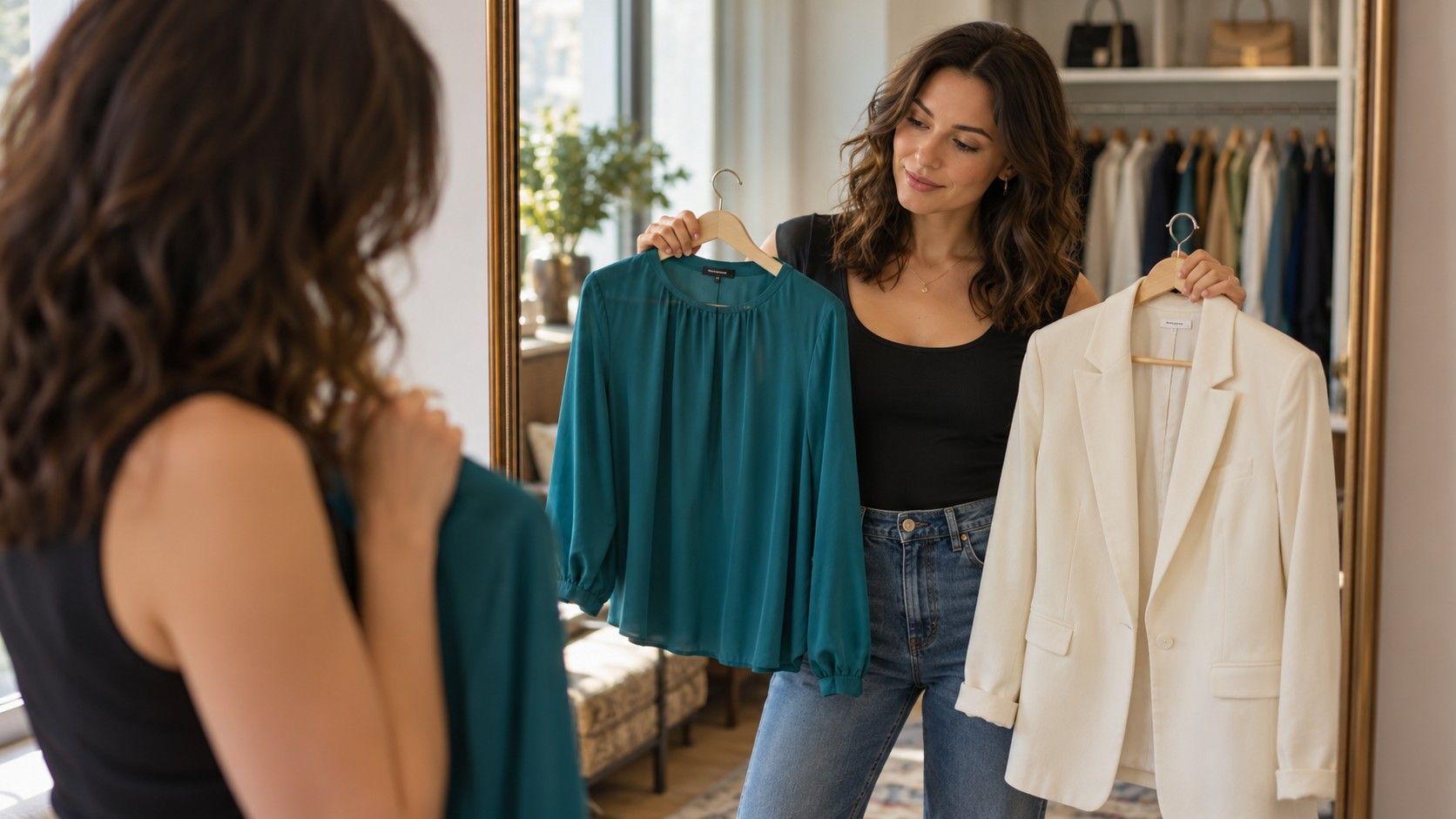
A jacket that feels comfortable over a thin T-shirt can become restrictive over a blouse. Try it with the sleeve volume and fabric you actually wear. Reach forward with both layers on and watch whether the inner sleeve gathers near the armhole. Sometimes changing the blouse solves the problem; sometimes the jacket needs a different sleeve or back shape. Buying a size up is one option, rather than an automatic first step.
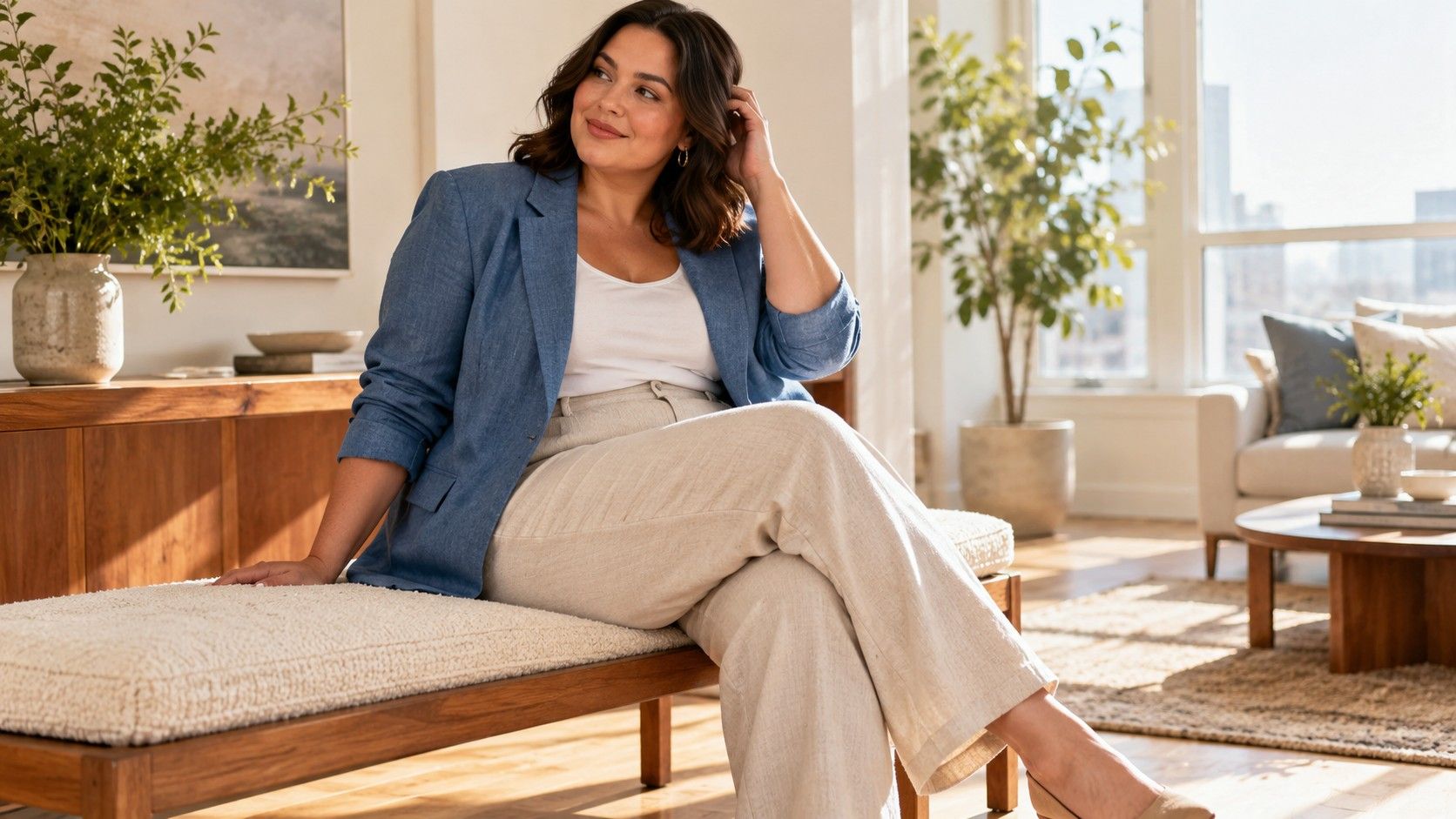
Fasten the jacket and then wear it open. A jacket intended to close should not rely on being left open to disguise severe pulling. On the other hand, an intentionally open-front layer has its own construction and can work well without a closure. Look at the collar and front edges: they should sit in a way you like without constant rearranging. Your bag strap belongs in the test too.
Shoulder alterations can be more involved than shortening a sleeve or adjusting a simple hem. If a garment is already yours, ask a tailor what is feasible before buying more of the same cut. For a new purchase, a different pattern may be easier than an ambitious alteration. Keep the cost, fabric and intended use in the decision. A costly repair is less appealing for a jacket you only half like.
| What you notice | What to compare | Check in motion |
|---|---|---|
| Pulling across the back | A cut with different back ease or armholes | Reach forward and return to rest |
| Inner sleeves bunching | Simpler inner sleeve or roomier outer sleeve | Bend elbows with both layers on |
| Waist loose, shoulders comfortable | A straighter cut or a feasible waist alteration | Fasten, sit and check the side seams |
| Jacket keeps shifting | Different collar and shoulder construction | Walk with the bag you normally carry |
Let dresses fit more than one measurement
A dress joins the upper and lower body in one garment, which can make size differences more noticeable. Start with the area that needs the most room for comfortable movement, then inspect the rest. If the shoulders fit and the waist is loose, you may like the straight shape already. If you prefer more definition, consider a seam adjustment, a gentle tie or a different dress design.
A wrap dress gives some adjustment through the middle, but the neckline and armholes still need to fit. Bend forward, sit and take a stride to see whether the wrap remains covered as you intend. With a shirt dress, check between the buttons while seated. A closure can look smooth standing upright and pull as soon as you move. A small fastening adjustment sometimes helps, but strong tension may call for another cut.
Separates can create a dress-like outfit while allowing different sizes. Try a top and skirt in related colors, or a matching set if it suits your wardrobe. Compare a full tuck with a loose hem and a slight tuck. The best version is the one that gives the outline you want without having to be reset every few minutes. Matching labels or measurements are not a requirement for an outfit to feel coherent.
Make a fitting-room decision you can explain later
Bring the shoes, underwear and inner layer that affect how the garment will sit. Check the side and back views as well as the front. If you take photographs, keep the camera position and distance consistent. A close wide-angle photograph can exaggerate proportions, while a carefully posed image may hide a fit problem. Use the picture to compare the clothes, then return to how they feel in motion.
Before buying, name the reason the garment works. Perhaps the sleeves let you reach easily, the neckline stays in place or the hem goes with both trousers you already own. If the only reason is that a chart recommended it for your shape, try another option before deciding. A useful purchase should solve a clothing need you can recognize at home.
After wearing an outfit for a day, note any repeated adjustment. Were you tugging at the cuffs, pulling the shirt down or shifting a shoulder seam? Those small patterns give the next shopping trip a precise direction. You can enjoy broad shoulders, a strong jacket or a narrow trouser silhouette without balancing anything away. The goal is clothing that lets you choose how to look and then get on with your day.