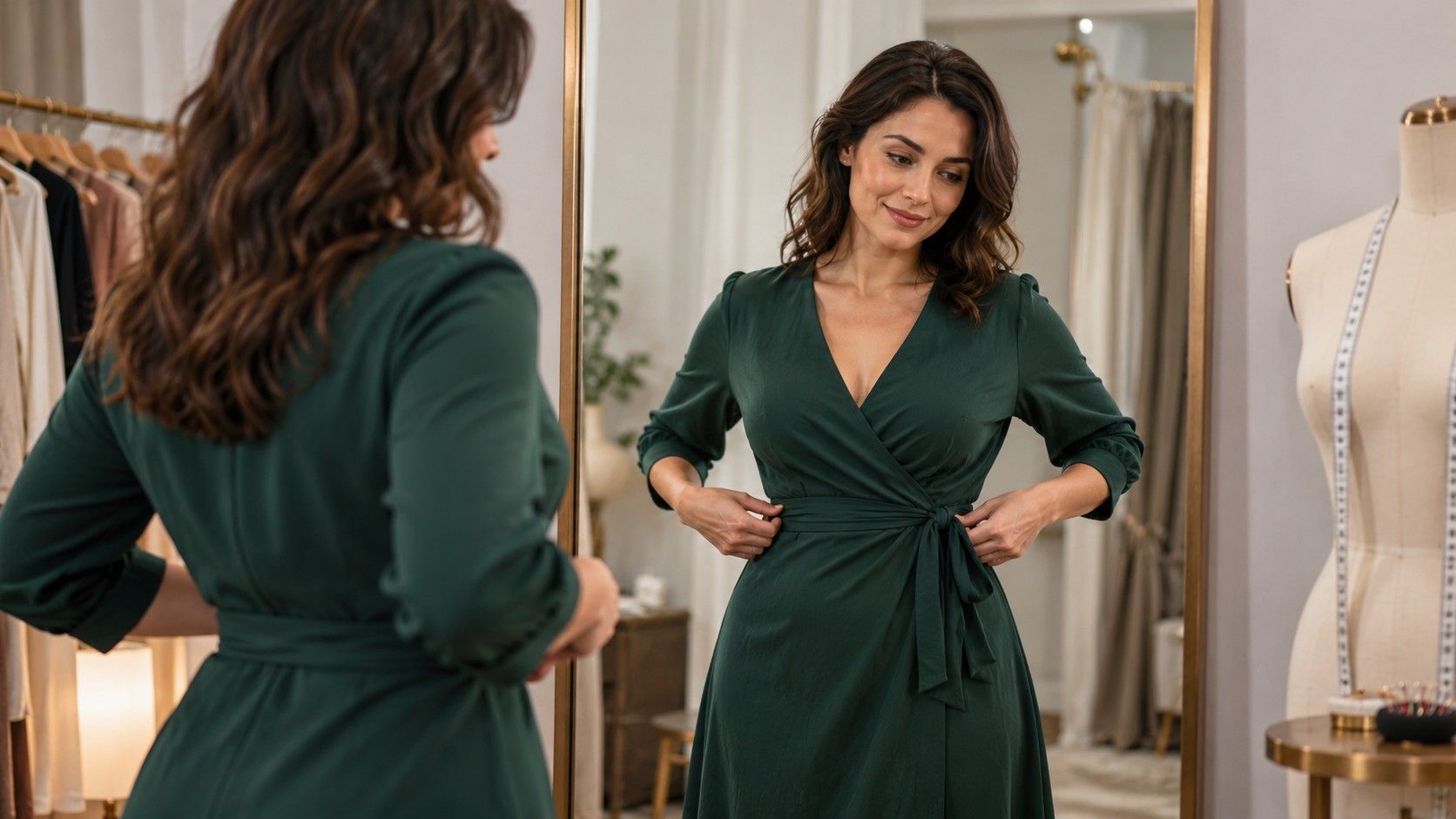
Trousers can fit through the hips and leave space at the back waist; a dress can fit at the waist and pull elsewhere. These are ordinary problems of garment shape and room for movement. I would start by identifying the exact point of tension or excess before adding a belt, changing size or buying a different style.
Separate the shape description from the size you buy
Hourglass is an informal term for a relationship between the waist and upper and lower body, with different definitions across styling guides. It does not supply a clothing size or tell you what you must emphasize. If you are exploring hourglass body shape style, use the term to find possible cuts, then judge the garment by fit, comfort and the outline you want.
Two people who use the same shape label can need different garment lengths, rises, armholes and bust shaping. A size chart may also place your measurements in different size columns. That is information about the chart, rather than a reason to force one number. Check the retailer’s measuring instructions and compare them with the finished garment details when available.
Measure a comfortable garment as a practical reference. Lay it flat without pulling the fabric and note the relevant widths and lengths. Keep body and garment measurements separate: the latter includes the room and design needed for the cut. Stretch, lining and fabric weight can change how that room feels. Matching one waist number cannot settle the whole fit.
Your preferred silhouette remains a choice. You might enjoy a close waist on a dress and a relaxed straight line in a shirt. You can wear wide trousers, an oversized knit or an unfitted coat without treating them as exceptions that need defending. Fit is about how a garment behaves, while styling includes what you want it to look like.
Read pulling and gaping as clues, not a complete diagnosis
Look at the garment while standing naturally, then sit and move. A gap at the back waist can suggest that the waistband shape does not follow you closely enough, but check whether the trousers are being pulled downward elsewhere. Tightness through the seat or a rise you dislike can alter where the band sits. A belt may hide the gap while leaving that underlying discomfort.
At a shirt front, examine whether buttons separate when you reach or sit. Compare another cut with more room where you need it. Going up a size may help, yet it can also change the shoulder position and neckline. A top with different shaping or construction can be a better option than trying to correct every area of one pattern.
Wrinkles need context. Fabric can crease because you have been sitting, because the cloth has little recovery or because the garment is pulling. Do not treat every fold as proof of bad fit. Move, smooth the fabric gently and see what returns. The strongest clue is often a combination of visible tension and a place where movement feels restricted.
Check the rear and side views without twisting your torso toward the mirror. A second mirror or a consistent photograph can help you see where a seam travels. Keep camera distance and angle similar during comparisons. The image is a reference for the clothes, not a reliable measurement of your body proportions.
Compare a curved cut with a straighter one
Some trousers described as curvy provide a different relationship between waist and hip measurements. The label is not standardized, so read the actual chart and try the garment if possible. Compare it with a straighter cut in the same fabric. You are looking for enough room through the seat and thighs with a comfortable band, rather than simply the smallest visible waist.
Use a seated check before deciding. A curved waistband may lie closer while a straight one leaves a gap, but the rise and band position still matter. Walk, climb a step and bend gently. Notice whether the crotch seam pulls or the trousers slide. If the waist needs less adjustment but another area becomes uncomfortable, keep comparing instead of accepting the trade automatically.
A skirt offers another useful comparison. A shaped waistband and seams may follow your preferred outline, while a straight or bias-cut design can hang differently. Try the skirt with the top and underwear you expect to wear. Check whether the hem stays reasonably settled as you walk and whether the waistband stays comfortable after sitting.
| Fit observation | Compare next | Check before deciding |
|---|---|---|
| Back waist gap | A differently curved waistband | Seat room and where the band settles |
| Pulling across the hips | More room or another pattern | Seated movement and pocket tension |
| Shirt buttons separate | Different bust shaping or cut | Shoulders, neckline and reach |
| Dress waist sits too high | Another bodice length | Seam placement after lifting arms |
Fit jackets and dresses through several areas at once
For a jacket you intend to button, fasten it in the fitting room and reach forward. Check the upper back, arms and front closure together. A jacket that fits only when held open may still be useful if open is how you want to wear it, but make that a conscious choice. Try it over your real layer thickness rather than a much thinner changing-room top.
Waist shaping can come from darts and seams without a tight fit. Compare a shaped jacket with a straighter one over the same inner outfit. The first may give the outline you enjoy; the second may allow more room for layers. Neither is inherently right for an hourglass label. Look at the hem and side view as well as the waist.
In a dress, check bodice length and waist placement before deciding that the size is wrong. The seam may land where you like while standing, then ride upward when you lift your arms. The neckline can also shift when you sit. Try ordinary movements and check the lining if present; a comfortable outer fabric cannot compensate for a restrictive lining.
Wrap and stretch styles are options rather than automatic solutions. A wrap neckline may need more attention than you want, and a stretch dress can still feel restrictive if its construction is too close for your preference. Compare the same movements in a woven or less fitted dress. The most useful recommendation is the one that survives your actual day.
Choose between an alteration and a different garment
A small waist adjustment may be practical when the rest of the garment fits well, but construction decides what is possible. Pockets, belt loops, zips and seam allowance can complicate the work. Ask a tailor to inspect the actual garment and explain the result before assuming that any back gap can be removed easily.
Be more cautious when several areas need work. Altering a waistband while reshaping the seat and changing the rise is a different proposition from shortening a hem. Shoulder and armhole changes can also be involved. If you are buying a new garment, compare the total cost and uncertainty with trying another pattern. A discount does not make a difficult alteration worthwhile by itself.
Use temporary styling to test the outline when safe and practical. A shallow tuck can show whether you like a clearer waist boundary; folding a hem can help compare lengths. These tests tell you about appearance, not whether a permanent construction change will work. Avoid pinning a garment in a way that limits movement and then judging it only while standing.
After choosing a better-fitting piece, wear it for a full ordinary outing before duplicating it. Note whether the band stays comfortable, whether you adjust the neckline and whether the fabric moves as you prefer. Keep those observations for the next shopping trip. Knowing the rise, shaping and ease you like is more useful than a list of clothes that a shape label supposedly permits.