Long, relaxed clothing and a muted palette can work together without turning your wardrobe into a set of restrictions. I approach Flamboyant Natural and Soft Summer as two separate collections of styling ideas: one about an outfit’s lines, the other about color relationships. The useful work happens when you compare those ideas in clothes you already have.
Separate the silhouette idea from the color choice
Flamboyant Natural and Soft Summer describe different styling frameworks. The first is commonly used in conversations about Kibbe-inspired clothing lines; the second belongs to seasonal color analysis. Neither is a scientific diagnosis, and neither can establish your identity from a measurement or a photograph. You can borrow the outfit ideas without settling either label. That is useful when you like long jackets and muted colors but feel uncertain about an online typing result.
In practical wardrobe terms, this combination can mean an easy line through the outfit, room around the upper body and colors that feel softly blended. Treat each as a proposal to test. A person who enjoys a short fitted jacket or a bright scarf has not failed a system. The question is whether the whole outfit expresses what you want and works for the day ahead.
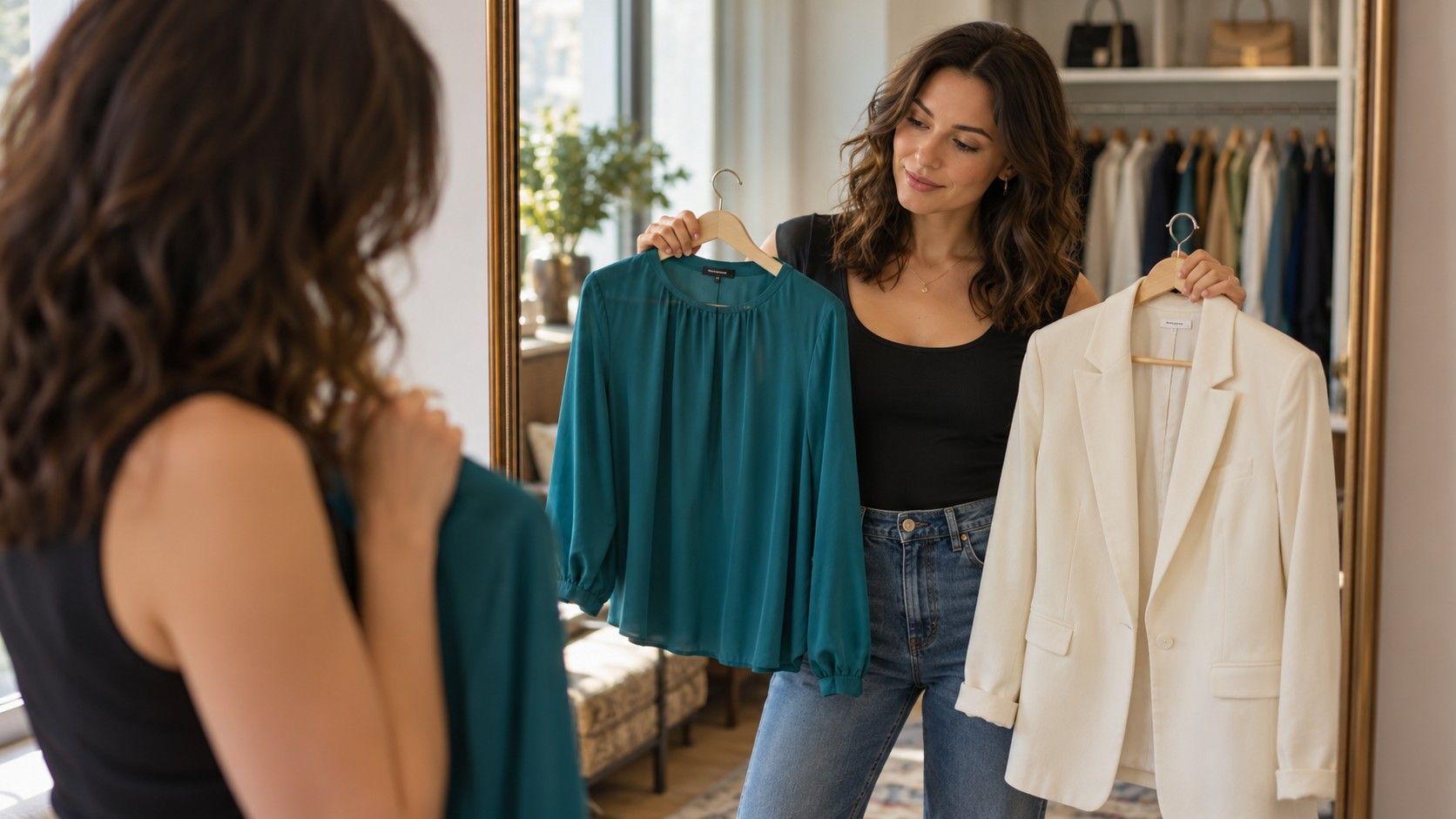
I separate the two decisions when trying clothes. First I compare the fit and outline in familiar colors. Then I hold two or three alternative colors near my face in ordinary daylight. Changing the jacket length, neckline and color at once makes it hard to know what caused a preference. A simple comparison produces a more useful answer than a long list of things you are told to avoid.
Try one continuous line before buying a longer wardrobe
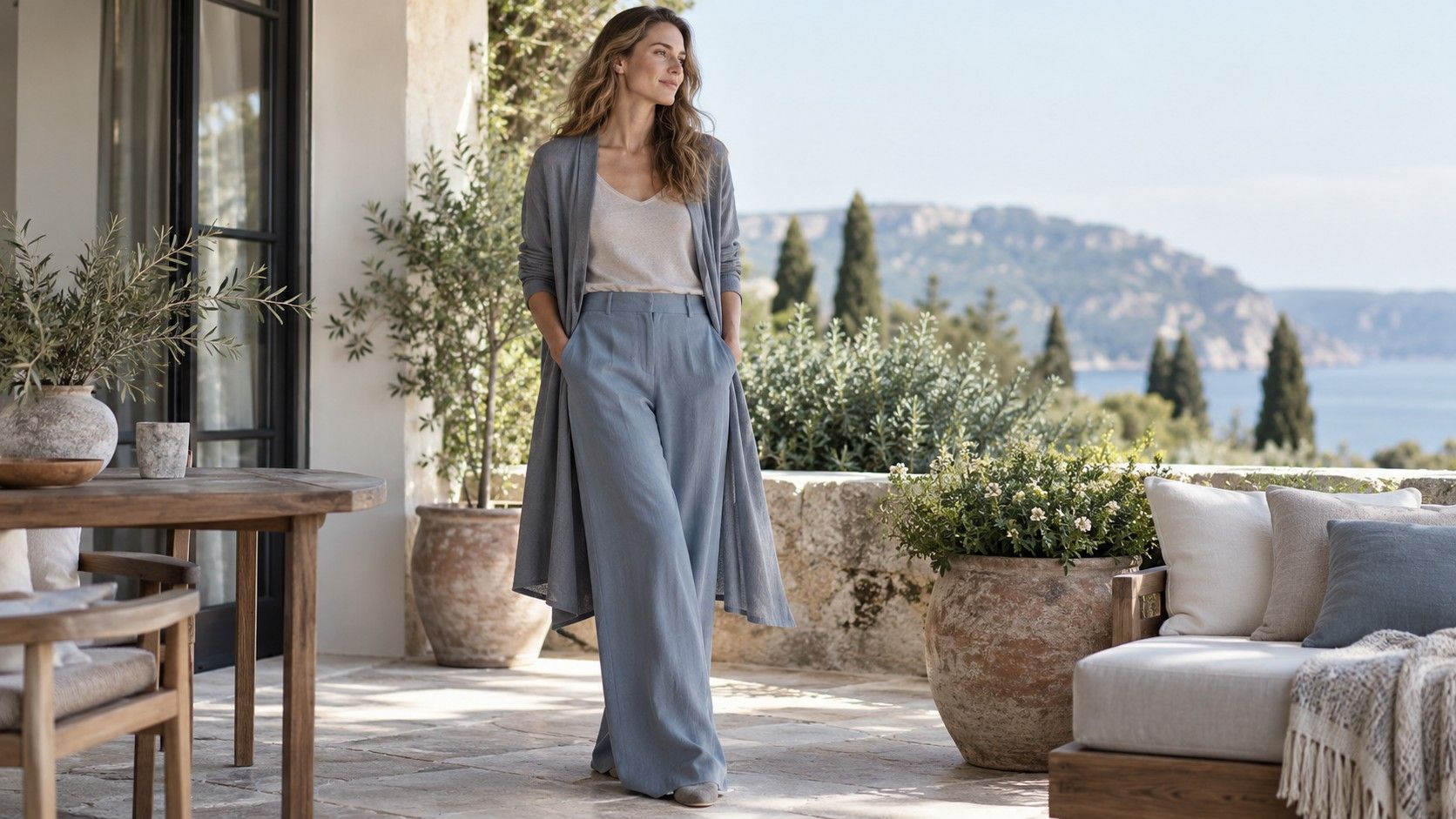
A long visual line does not require every garment to reach the floor. Start with trousers and a top in related shades, then add an open shirt or jacket. The uninterrupted area through the middle can give the outfit a connected feeling. Next try a more contrasting top with the same trousers. You might like the sharper division. This is a design choice to observe, rather than a correction your body needs.
With wide trousers, check the hem in your normal shoes and take a full stride. Fabric pooling on the floor may be a length issue rather than an expression of relaxed style. With a long cardigan, turn sideways and look at where the hem settles. If it catches at the seat or twists around the legs, the cut or fabric may be preventing the line you wanted. Extra inches cannot compensate for a garment that does not hang comfortably.
A dress offers another comparison. Try an easy column or a gently shaped dress, with and without a belt. Then add a jacket whose hem falls at a clearly different point. I find a temporary pin or a folded hem helpful before committing to an alteration. The aim is to notice what each change does to the outfit, including whether you can sit, walk and use your pockets without constant adjustment.
Keep relaxed fit distinct from extra fabric everywhere
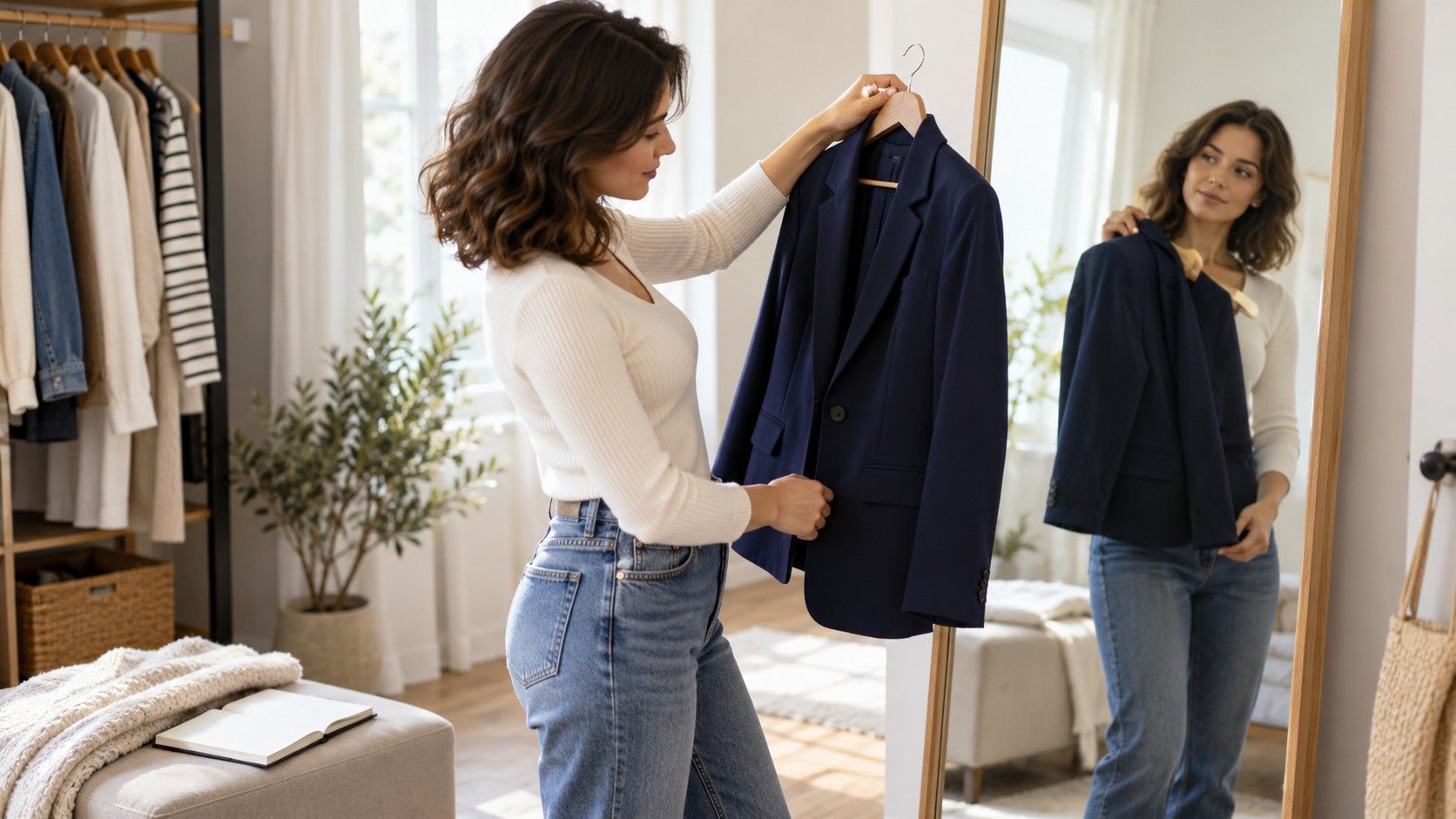
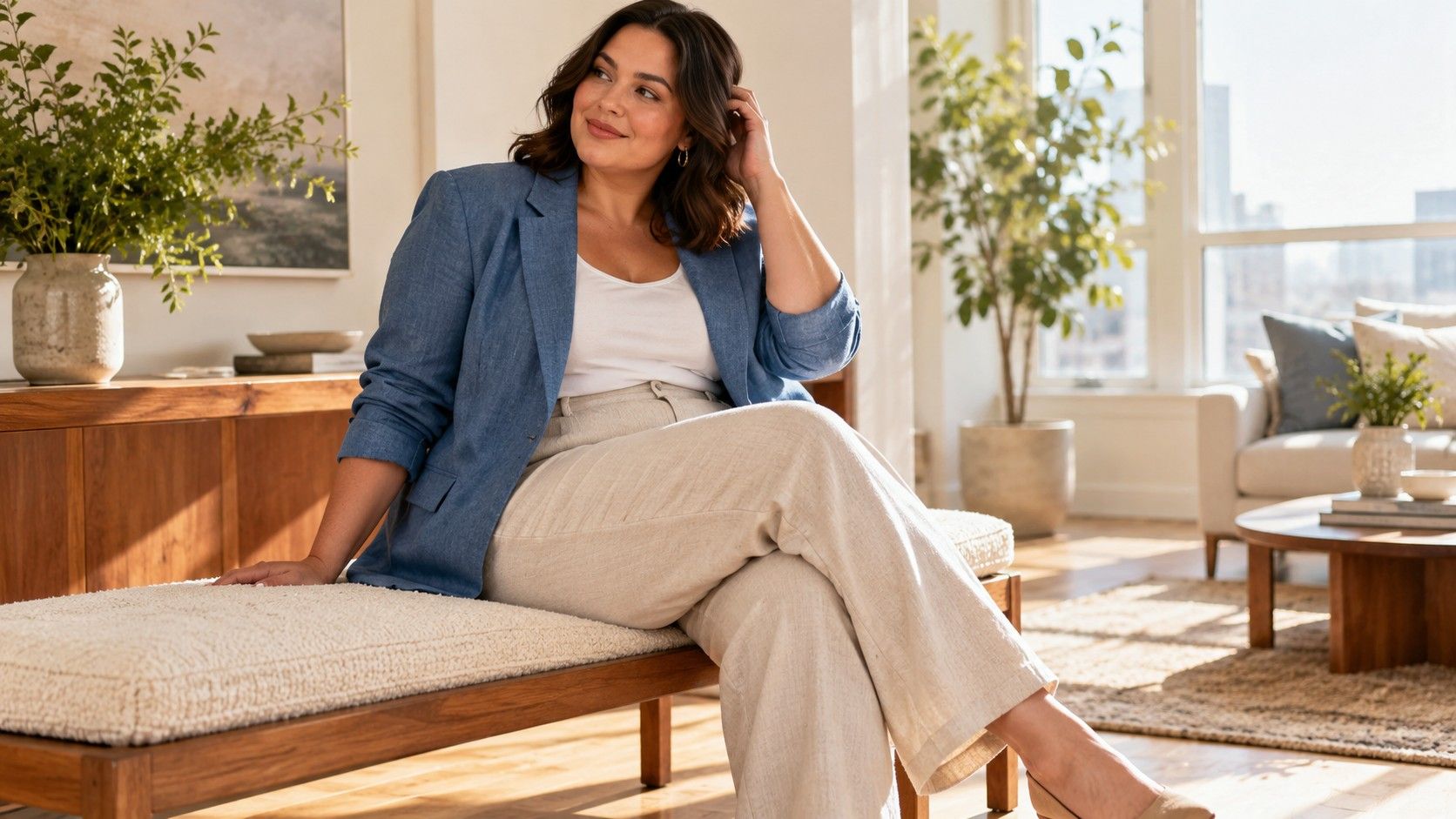
A relaxed jacket still needs a useful relationship with the body beneath it. Examine the collar, armholes and upper back while reaching forward. A deliberately dropped shoulder can work, but it should look intentional and allow movement. A sleeve that hangs over your hand or a collar that continually slips backward may be inconvenient even if the jacket is technically oversized by design.
Compare a roomy jacket over a fairly simple top with the same jacket over a voluminous blouse. Both can be good outfits; the second asks more of the layering. If fabric bunches under the arms, try a slimmer inner sleeve before changing sizes. If the jacket pulls across the back, try a different cut. The chest circumference alone does not describe the sleeve shape, shoulder angle or depth of an armhole.
Fabric also changes the result. A substantial woven jacket can create a clear outline, while a very soft knit may collapse into folds. Neither effect is inherently better for Flamboyant Natural styling. Decide whether you want structure, softness or a mixture, then check the actual garment. At a desk, heavy cuffs can catch on a keyboard; while carrying a shoulder bag, a slippery open layer may need frequent repositioning. These small irritations are reasons to reconsider a piece.
Build muted contrast without making every shade identical
Soft Summer palettes are generally described as muted and leaning cool, though different systems draw their boundaries differently. Common wardrobe examples include dusty blue, softened rose, cool taupe and gentle grey-green. Use those names as directions, since two items sold as dusty blue can look very different beside each other. The available garment matters more than the color name on its tag.
Try a medium blue-grey top with charcoal trousers, then compare the same top with pale grey trousers. The first has a deeper base; the second feels lighter overall. Both can preserve a muted color relationship while creating different amounts of light-dark contrast. You do not need every item to occupy the same narrow band of depth. A bag, shoe or visible inner layer can add definition if the combination feels too indistinct for your taste.
Keep the light consistent when comparing colors near your face. Stand near a window out of direct sun, use the same mirror and remove any automatic photo filter. Look for a preference you can describe: perhaps one shade feels calmer, another seems more vivid, or one works better with your makeup. Camera processing, room lighting and surrounding colors can change the impression. One photograph should not force you to discard half your wardrobe.
For a practical flamboyant natural soft summer outfit, try a long grey-blue shirt over a muted rose top with soft charcoal trousers. Then replace the shirt with your existing navy jacket. You may prefer the greater definition. Dark navy, black or a bright accessory can remain part of your style even when they fall outside someone else's palette card.
Choose prints and accessories by what they do together
A large print need not be loud. A broad abstract pattern in similar blue and grey tones can feel quieter than a tiny black-and-white check. Compare scale and contrast separately. Lay a patterned shirt beside the trousers and outer layer you would actually wear with it, then view the full outfit from a few steps away. A close-up swatch cannot show how the pattern interacts with the rest of the clothes.
For accessories, start with one visible choice: a substantial pendant, a long scarf or a softly structured bag. A large accessory can echo the easy scale you want, but it should still be comfortable. Check whether a pendant hits the desk when you lean forward, whether a scarf adds unwanted warmth and whether a bag holds its shape when filled. A beautiful object that gets in the way may be better for a different day.
| If the outfit feels… | Compare this change | Keep an eye on |
|---|---|---|
| Too indistinct | A deeper muted bag or shoe | Whether you enjoy the added definition |
| Busy around the neckline | Remove a scarf or switch to a simpler top | Collar, print and necklace competing in one area |
| Broken into many sections | A top and trousers in closer shades | Whether the connected line suits your mood |
| Overwhelming to move in | One simpler inner layer | Sleeve bulk, hem clearance and usable pockets |
The useful change is often subtraction. A patterned long jacket may already carry the outfit, leaving little work for a necklace or scarf. On another day, plain layers may welcome both. The framework cannot decide how much visual activity you enjoy, and it does not need to.
Make three outfits from clothes already in reach
For an ordinary workday, combine straight or wide trousers, a simple top and an open jacket. Keep two of the pieces close in color if you want continuity. Before calling it finished, sit down with your work bag and check the jacket at the elbows and shoulders. If your workplace has specific clothing requirements, build around those first. A style label has no special authority over the setting.
For a weekend, try comfortable jeans, a washed blue shirt and the shoes you can walk in for an hour. Roll the sleeves once and compare them unrolled. Leave the shirt open over a top if you like a longer outline, or fasten it if that feels more like you. A slight change in sleeve length can make a familiar garment feel different without adding another purchase to the wardrobe.
For dinner, start with a simple long dress or a skirt and top in related shades. Add a jacket only if you want the layer or need the warmth. Test a larger earring against a pendant, one at a time, and choose what feels comfortable through an evening. There is no need to make every outfit a demonstration of every guideline. One clear idea can be enough.
Keep quick notes after wearing these combinations: which layer stayed in place, which colors you reached for again and which hem became annoying on the stairs. Those observations tell you where an alteration or a new piece might help. Keep Flamboyant Natural and Soft Summer as useful words for your preferences, while letting the actual clothes, your comfort and your own eye make the final decision.